The Subsistence Minimum (Mínimo de Existência) in Portuguese IRS Explained
Blog Post
Tax, Live in Portugal
The Subsistence Minimum (Mínimo de Existência) in Portuguese IRS Explained
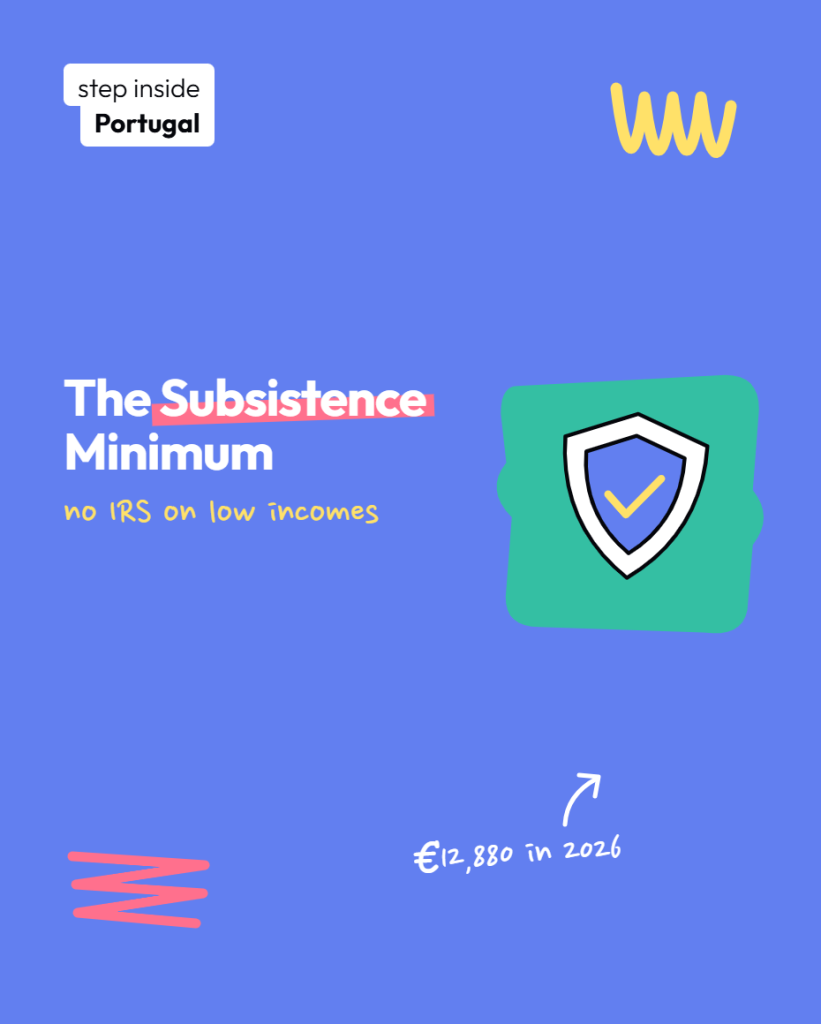
Portugal protects lower incomes from IRS through the subsistence minimum (mínimo de existência). If your income is mainly from work or pensions and doesn’t exceed a reference value — €12,880 in 2026 — you generally don’t pay IRS. Above that, the benefit decreases gradually. Here’s how it works.
The subsistence minimum ensures that people with low incomes keep enough to live on. Since 2023, it works as a deduction from taxable income (an abatimento), calculated before the tax, rather than a floor applied after the tax.
💶 The 2026 Reference Value
€12,880 per taxpayer — equal to 14 × the minimum monthly wage (€920 in 2026)
Taxpayers with gross income up to this value from eligible sources generally pay no IRS
Above it, the deduction reduces progressively until it disappears, avoiding a sudden jump in tax
👤 Who Benefits?
Taxpayers whose gross income comes mainly from:
Employment (category A)
Pensions (category H)
Self-employed activities listed in the IRS Code’s table of professional activities (category B), with some exceptions
🚫 Who Doesn't Benefit?
The subsistence minimum doesn’t apply when, for example:
The household’s gross income is high (above 2.2 × 14 × IAS per taxpayer, in joint returns)
Non-aggregated income taxed at special rates (such as rents or capital income) exceeds 14 × IAS per taxpayer
Most of the income comes from other categories (such as rents or investments)
The law looks at all your income, including income taxed at flat rates, to decide whether you qualify.
🧮 How Is It Calculated?
The calculation follows a formula in Article 70 of the IRS Code, which takes into account:
The reference value (€12,880)
Your gross income and specific deductions
The first IRS bracket and the general family expenses deduction
The tax authority applies it automatically in the assessment — you don’t need to request it.
🌍 Foreigners and Non-Residents
Residents in Portugal benefit regardless of nationality
Non-residents are generally taxed at flat rates and don’t benefit
Retirees with modest pensions moving to Portugal may benefit if their pensions are taxed in Portugal
💡 Practical Tips
Low income? You may still need to file a return — the subsistence minimum is applied in the assessment.
Watch your other income: rents or investments above the threshold can remove the benefit.
Check the withholding: if tax was withheld during the year, you may get it back.
🚀 Final Considerations
The subsistence minimum protects lower incomes from IRS. In 2026, earning up to €12,880 a year from work or pensions generally means no IRS at all — and a gradual increase in tax above that.
📢 Expert Advice: If your income is close to the minimum wage and tax was withheld, file your return. The subsistence minimum may give you a full refund.
Portuguese IRS has two kinds of rates: progressive rates, which increase with income (from 12.5% to 48%), and special flat rates (taxas especiais), such as 28% or 25%. Some income must always be taxed at progressive rates. Other income is
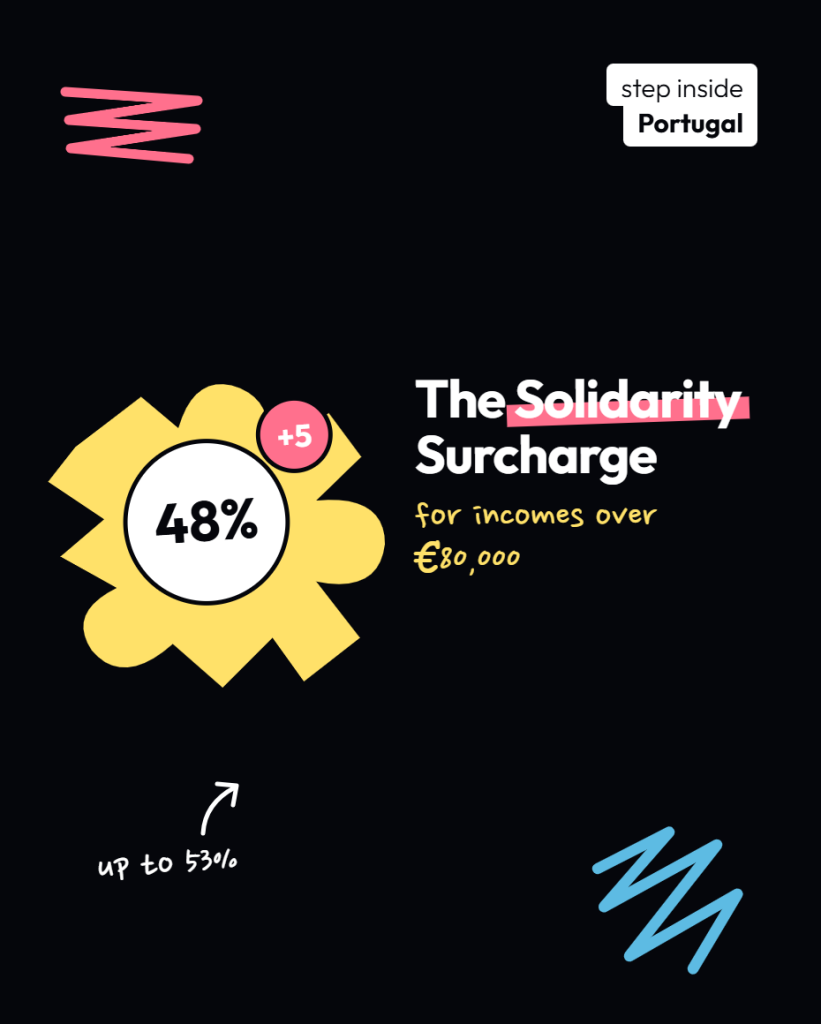
Portugal's top IRS rate is 48% — but for very high incomes, there's an extra layer: the solidarity surcharge (taxa adicional de solidariedade). It only affects taxable income above €80,000, but it can push the marginal rate up to 53%.
Portugal protects lower incomes from IRS through the subsistence minimum (mínimo de existência). If your income is mainly from work or pensions and doesn't exceed a reference value — €12,880 in 2026 — you generally don't pay IRS. Above that,