- Blog Post
- Tax, Live in Portugal
The IRS Solidarity Surcharge in Portugal: What It Is and When It Applies
📊 The Rates
The surcharge applies to the part of taxable income above certain thresholds (Article 68-A of the IRS Code):
- 2.5% on taxable income between €80,000 and €250,000
- 5% on taxable income above €250,000
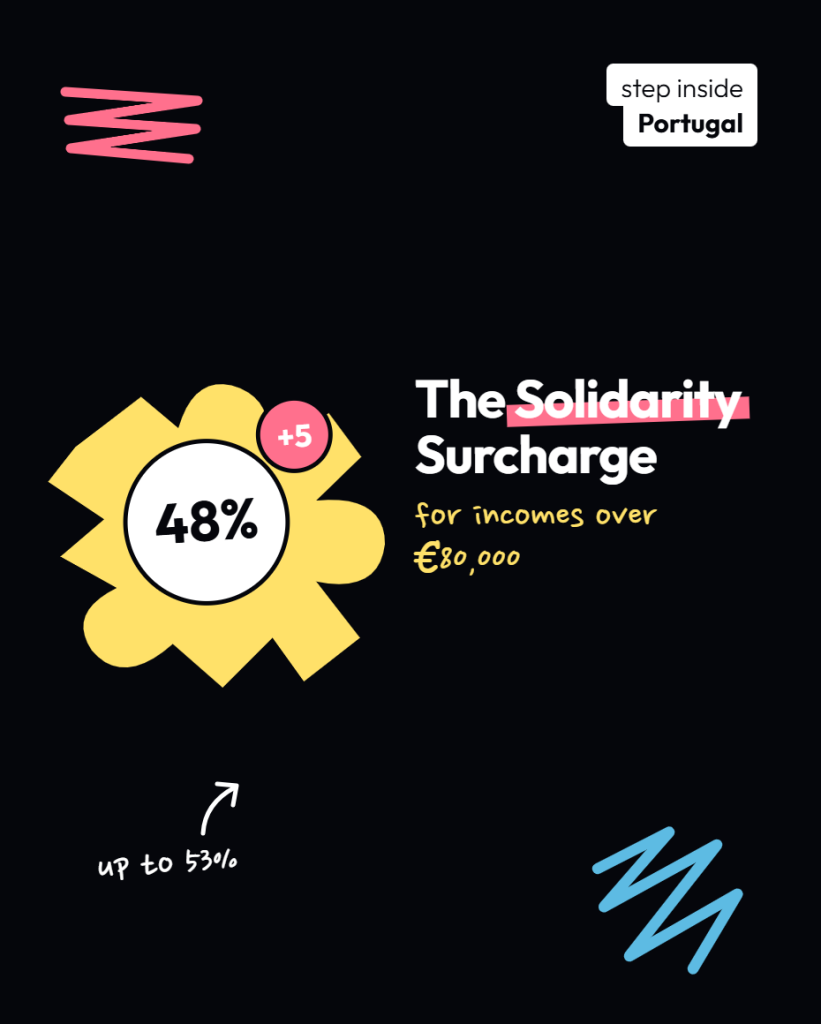
Combined with the top bracket (48%):
- Income between €80,000 and €250,000: up to 50.5% marginal rate
- Income above €250,000: up to 53% marginal rate
🧮 How It Works
- It’s calculated on taxable income (after specific deductions), per taxpayer
- In joint taxation, the thresholds apply to the taxable income divided by two (the marital quotient), and the result is multiplied by two
- It applies to aggregated income — including rents, dividends or financial gains if you choose to aggregate them
- Deductions from tax don’t reduce the surcharge
Example: taxable income of €120,000 → surcharge = (€120,000 – €80,000) × 2.5% = €1,000
👤 Who Pays It?
- Residents with high taxable income from work, pensions, business or aggregated income
- Non-residents in specific situations (for example, when taxed at progressive rates on Portuguese income, such as real estate gains)
🏠 Watch Out for Capital Gains
Property capital gains are always aggregated (50% of the gain). A large sale can push your taxable income above €80,000 — and trigger the surcharge in that year.
✨ Special Regimes
- IFICI and NHR: income taxed at the special 20% rate isn’t subject to progressive rates, and the treatment of the surcharge depends on the regime and the income
- Flat-rate income (28% on capital income, 25% on rents) not aggregated isn’t subject to the surcharge
💡 Practical Tips
- Planning a large property sale? Consider the timing and the impact on your taxable income.
- Choosing whether to aggregate? Include the surcharge in your simulation.
- Joint taxation can reduce the surcharge when one spouse earns much more than the other.
🚀 Final Considerations
The solidarity surcharge only affects high incomes, but it can add up to 5 percentage points to the top rate. Planning the timing of extraordinary income — such as property sales — can make a real difference.
📢 Expert Advice: Before selling a property with a large gain, simulate your IRS for that year. The gain may push you into the solidarity surcharge.
High income in Portugal? Step Inside Portugal’s tax team can plan your IRS and simulate the options — find out more about our tax services here. ✨
This article is for general information only and doesn’t constitute tax advice. Rates as of 2026.
Save PDF version for later
Share it with friends
Want to learn more? Explore our other resources...
- Blog Post
- Tax, Live in Portugal
- Blog Post
- Tax, Live in Portugal
- Blog Post
- Tax, Live in Portugal
Lorem ipsum dolor sit amet, consectetur adipiscing elit. Ut elit tellus, luctus nec ullamcorper mattis, pulvinar dapibus leo.