The Marital Quotient in Portugal: How Joint Taxation Really Works
Blog Post
Tax, Live in Portugal
The Marital Quotient in Portugal: How Joint Taxation Really Works
When married couples or unmarried partners opt for joint taxation in Portugal, the tax is calculated using the marital quotient (quociente conjugal). It can produce significant savings when one partner earns much more than the other — but it only affects income taxed at progressive rates. Here’s how it works.
When both earn similar amounts, the quotient makes little or no difference.
⚠️ Only for Progressive-Rate Income
The quotient applies only to income aggregated and taxed at progressive rates:
Employment, pensions, self-employment
Property capital gains (50%)
Any income you choose to aggregate (rents, dividends, interest, financial gains)
It doesn’t affect income taxed at special flat rates that isn’t aggregated — such as 28% on interest or 25% on rents.
👶 What About Children?
Portugal no longer applies a family quotient for children. Dependants are taken into account through deductions from tax (€600 or more per child), not by dividing the income.
📋 Other Effects of Joint Taxation
Deductions of both spouses are added together
The solidarity surcharge is calculated on the quotient and multiplied by two
Both spouses are jointly responsible for the tax
The option is made every year and must be chosen by both
Unmarried partners need to have lived together for more than two years, with the same tax address
If one spouse is non-resident, joint taxation is generally not possible
💡 Practical Tips
Simulate both options on the Portal das Finanças every year.
Big income difference? Joint taxation usually wins.
Similar incomes? Separate taxation is often equal or better.
🚀 Final Considerations
The marital quotient divides the couple’s progressive-rate income by two before applying the rates. When incomes are very different, it can bring real savings — but it doesn’t change the flat-rate taxes on investments or rents.
📢 Expert Advice: Don’t assume joint taxation is always better. Simulate both options each year — the result changes with your incomes.
If you pay someone to clean your home in Portugal, you're their employer — even if they only come a few hours a week. Here's how to register them with Social Security, how much you'll pay in contributions, what you
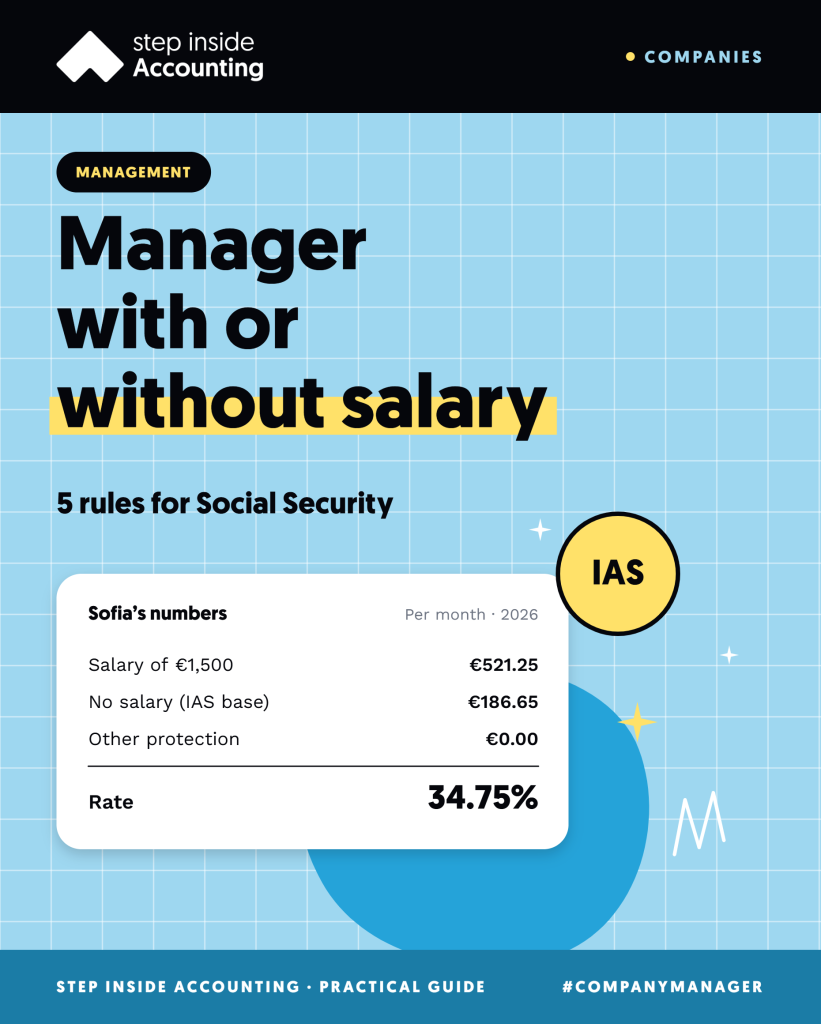
Many partner-managers decide not to take a salary to save on contributions. But being an unpaid manager does not, on its own, mean not paying Social Security. It all depends on whether or not you have other mandatory social protection,
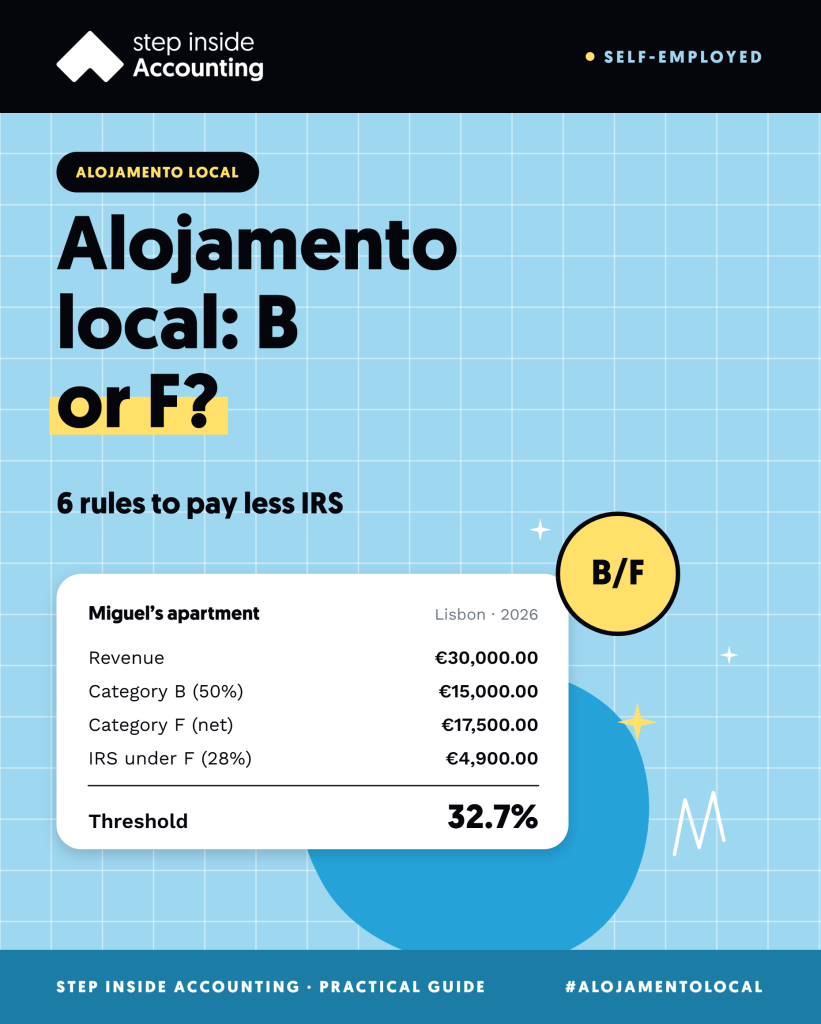
If you have a house or an apartment in alojamento local (short-term rental), you can choose every year how you pay IRS: as a self-employed worker, on a fixed percentage of what you receive, or as if it were rent,