Invoices: 5 rules for the expense to count in your company
Blog Post
Step Inside Accounting, Company
Invoices: 5 rules for the expense to count in your company
An expense only reduces the company’s tax if it is properly documented. A receipt without a tax number, an invoice in a personal name or a foreign receipt with missing details can cost you the deduction for corporate tax (IRC) and the VAT, and sometimes extra tax on top.
For the expense to count, the invoice must identify the company as the customer: the company’s name and tax number (NIF), not the partner’s personal NIF. An invoice with the personal NIF is a personal expense, even if it was paid with the company card.
Always ask for the invoice with the company’s NIF at the time of purchase. Once it has been issued, the supplier has to cancel it and issue a new one, and not all of them do.
2. What a complete invoice should show
Check that the invoice shows:
Name, address and NIF of the supplier and of your company.
Date, invoice number, ATCUD code and QR code.
A clear description of what you bought and the quantity. “Miscellaneous services” is not enough.
Price before VAT, VAT rate and VAT amount.
The reason for the exemption, if the invoice has no VAT.
A vague description is one of the most common problems in a tax inspection: if it is not clear what was bought, it cannot be proved that it was for the company.
3. Simplified invoices: valid, but with limits
A simplified invoice (fatura simplificada) is the short version, common in shops and restaurants. When the customer is a company, the supplier can only use it up to €100. Above that, ask for a full invoice.
For the company, a simplified invoice only counts if it shows the company’s NIF and the VAT. A till receipt without a NIF is, at most, proof of payment, not an invoice.
4. Foreign invoices count too
A purchase from a foreign supplier, such as a hotel in Madrid or a software subscription in the US, can also be a company expense. The document does not need to follow Portuguese rules, but it must show who sold, who bought, what was bought, the amount and the date.
Ask for the document to be in the company’s name. If it is in an uncommon language, the Tax Authority may ask for a translation. VAT paid in another country cannot be deducted in the Portuguese VAT return, and when you buy services from abroad there may be VAT to pay in Portugal (see the article on purchases from abroad).
5. No document, more tax
An expense with no document at all, just the card statement, is not accepted as a cost and also pays 50% autonomous taxation in IRC. An expense with an incomplete document, for example without the company’s NIF, is not accepted as a cost either.
Example
A €200 dinner with a client, paid with the company card and with no invoice: the company cannot deduct the €200 and pays another €100 in autonomous taxation. With an invoice in the company’s name, the dinner counts as an expense.
Team tip
Give the company’s NIF before you pay and photograph the invoice the same day. In the company’s e-Fatura area on the Tax Authority portal (Portal das Finanças), you can check which invoices suppliers have reported in the company’s name.
Want us to handle this for you?
Companies
Monthly accounting
Bookkeeping, tax obligations and managing partners’ salaries, all in one place.
This article is for information only and does not replace professional advice. Figures and rules are those in force at the date of publication and may change.
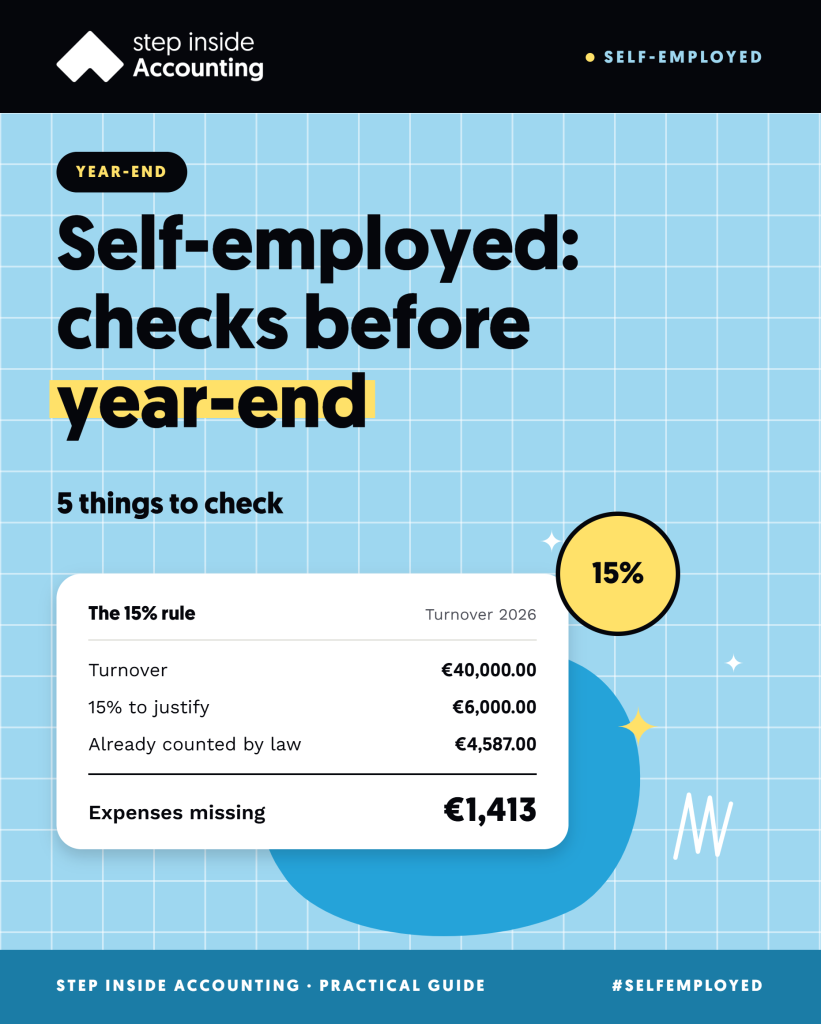
If you work on recibos verdes under the simplified regime, December is the time to review your expenses, VAT and Social Security. An hour of review now avoids paying too much income tax in 2027 and surprises in January.
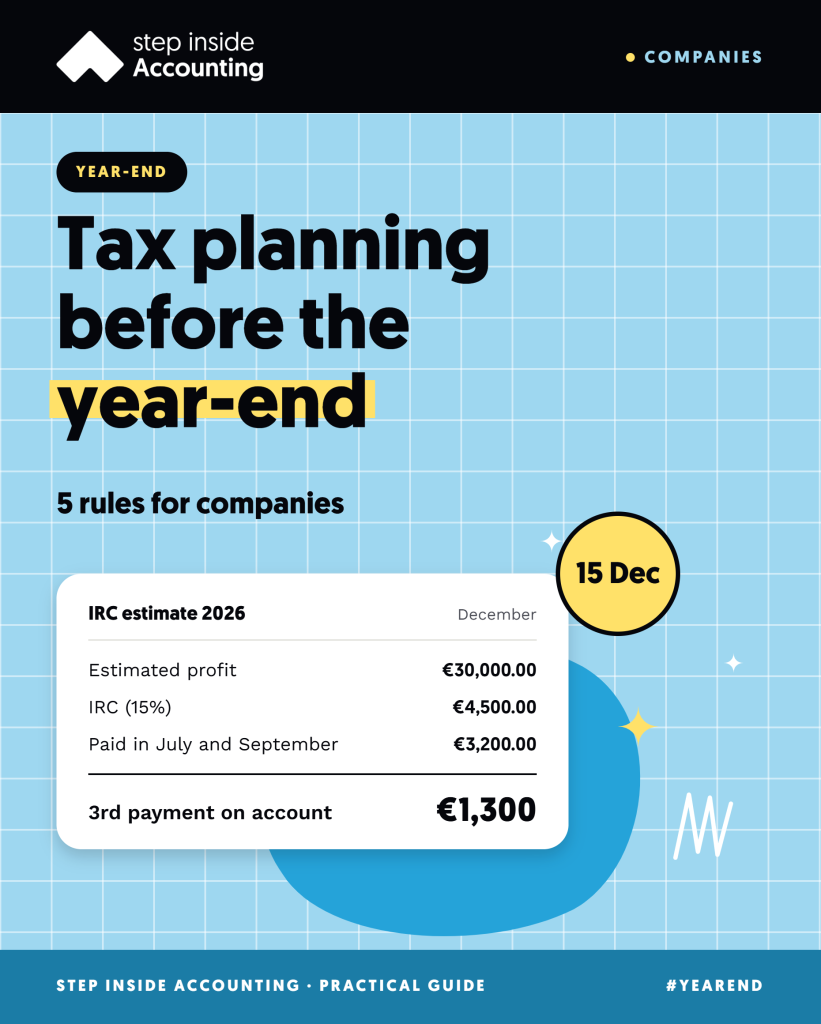
December is the last month in which you can still shape the year’s tax result. With a profit estimate in hand, the company can decide on purchases, adjust the last payment on account and prepare for 2027 with no surprises.
Many of our clients have a company in Portugal and live in another country, or move abroad after setting it up. The company keeps running normally, but there are specific rules for notifications, dividends, the manager’s salary and even the