IES: 5 rules to close the year without fines

The IES is the last piece of the year-end close: a single return that sends the company’s accounts to the Tax Authority, the Commercial Registry, the National Statistics Institute (INE) and the Bank of Portugal. It must be filed by 15 July, even if the company had no activity.

Step Inside Accounting · Practical guide

#StepInsideAccounting

1. One return, several recipients

The IES (Informação Empresarial Simplificada, the simplified business information return) brings together in a single filing several obligations that used to be separate: the annual return for the Tax Authority, the filing of the accounts with the Commercial Registry, and statistical information for the INE, the Bank of Portugal and the DGAE.

It includes the balance sheet, the income statement and several annexes, including VAT and Stamp Duty information. That is why it can only be done once the year’s books are fully closed.

2. The deadline is 15 July

For companies whose tax year matches the calendar year, the IES is filed by 15 July of the following year, even if that day falls on a weekend. The 2025 IES was due by 15 July 2026.

It is filed on the Tax Authority’s portal by the company’s certified accountant. The company just has to make sure the accounts are closed and approved in time.

3. First, the accounts are approved

The IES files the accounts the partners have approved. The year’s accounts should be approved by 31 March, with minutes. In a single-member company, a written decision by the sole partner is enough.

This is the normal calendar for a small company:

  • February and March: closing the books.
  • By 31 March: approval of the accounts.
  • May: IRC return (Modelo 22).
  • By 15 July: IES.

4. Even with no activity, it must be filed

A dormant company still has to file the IES. Having no activity during the year does not remove the obligation.

Filing itself is free, but registering the accounts with the Commercial Registry costs €80. It is paid by Multibanco reference within 5 working days of filing. Without that payment, the accounts are not registered, which can block other company registrations.

Example

A company with no sales in 2025 approves its accounts in March 2026, files its IRC return in May and the IES by 15 July, and pays the €80 registration fee. Even without a single euro of sales, all these obligations remain.

5. What happens if you miss it

Filing the IES late leads to a fine, which is much lower if the company puts things right on its own initiative, before it is notified.

The bigger risk is the filing of the accounts. If a company goes two years in a row without filing its accounts, and the Tax Authority reports that its IRC returns are also missing, the Commercial Registry can start an ex officio dissolution and liquidation of the company.

Team tip

Send us the year’s documents by February and sign the minutes approving the accounts in March. That way the IES is ready long before July. And pay the €80 as soon as you receive the reference.

Want us to handle this for you?

Companies

Monthly accounting

Bookkeeping, tax obligations and managing partners’ salaries, all in one place.

€250 + VAT / month

business@stepinsideaccounting.com

Self-employed

Recibos verdes without the stress

Tax returns, VAT and Social Security handled by people who know the regime inside out.

from €80 + VAT / month

self-employee@stepinsideaccounting.com


This article is for information only and does not replace professional advice. Figures and rules are those in force at the date of publication and may change.

Explore more resources
Share with someone who needs it

Want to know more? Explore the other Step Inside Accounting resources

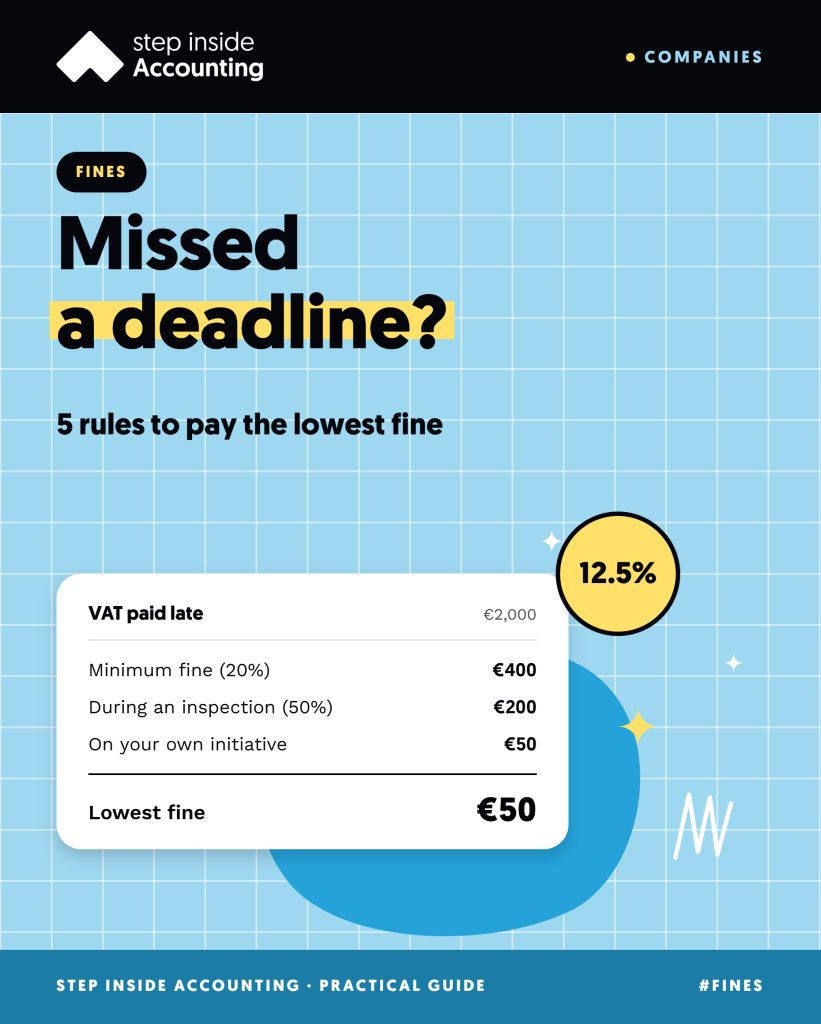
Filing a return or making a payment late happens. What makes the difference is what you do next: if you put things right on your own initiative, before the Tax Authority acts, you pay a fraction of the fine, and
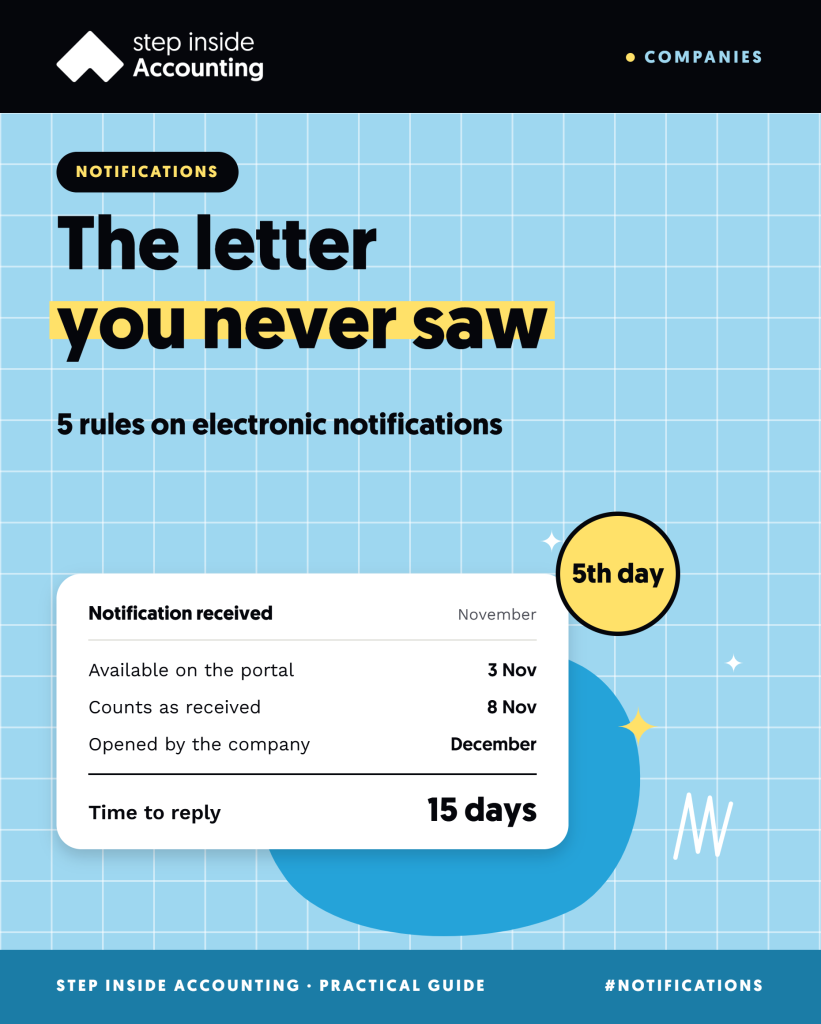
The Tax Authority and Social Security no longer send paper letters to companies. Notifications arrive electronically and count as received after a few days, whether you open them or not. A forgotten notice can mean a fine or a lost
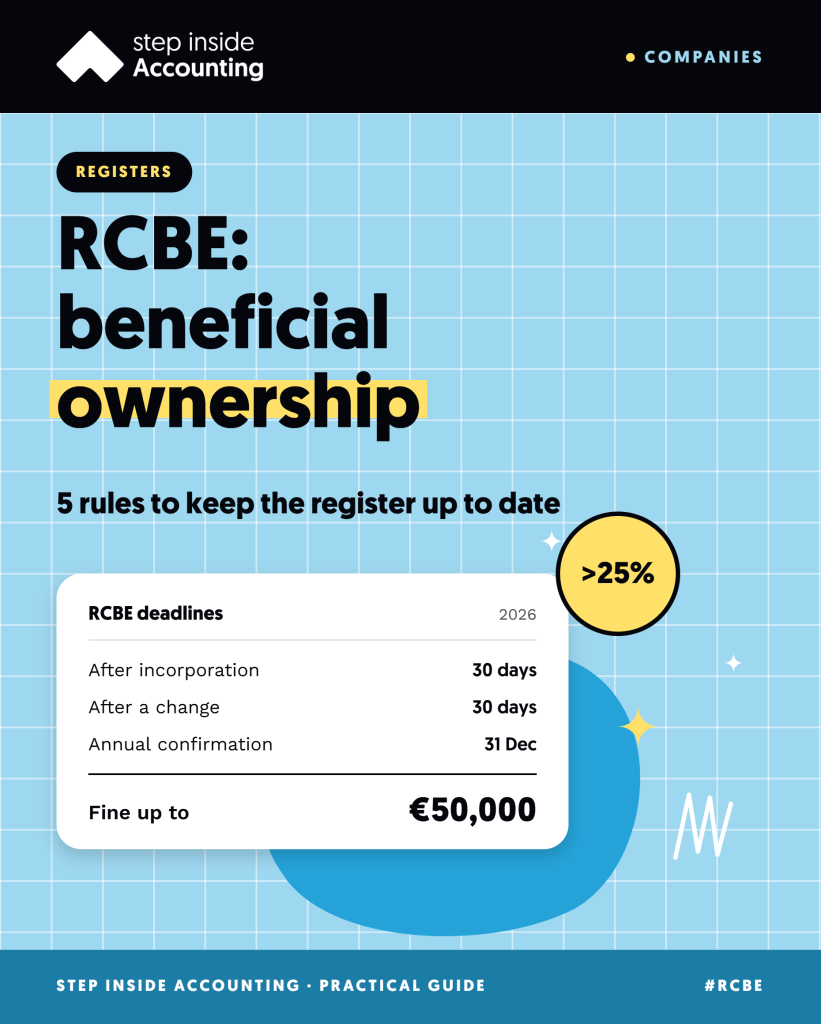
The RCBE identifies the people who, at the end of the chain, own or control the company. It must always be up to date: an unreported change stops the company from distributing profits and contracting with the State, and can