RCBE: 5 rules to keep the beneficial ownership register up to date

The RCBE identifies the people who, at the end of the chain, own or control the company. It must always be up to date: an unreported change stops the company from distributing profits and contracting with the State, and can lead to a fine of up to €50,000.

Step Inside Accounting · Practical guide

#StepInsideAccounting

1. Who the beneficial owner is

It is the individual who holds, directly or indirectly, more than 25% of the company’s capital or voting rights, or who controls it by other means. If no one meets these criteria, the management is declared as the beneficial owner.

In a single-member company, it is usually the sole partner. If the company is owned by a holding company, it is the person at the top of the chain who counts, even if the holding is foreign.

2. Changes: 30 days to update

The initial declaration is made within 30 days of the company’s incorporation. After that, any change must be reported within 30 days of the event. For example:

  • Sale or gift of shares, or a new partner coming in.
  • A capital increase that changes the percentages.
  • A change of managers.
  • A new address or new ID document for a beneficial owner.

Partners must tell the company about any change in their details within 15 days, so the company can meet its own deadline.

Example

The partner sells 40% of the shares to a new partner on 10 March. The company has until 9 April to update the RCBE with the new beneficial owner.

3. A yearly confirmation

Even if nothing has changed, the information must be confirmed every year: by 31 December on the RCBE platform, or in the IES by 15 July for companies that file it.

The confirmation is not needed if the company already made an update that year and nothing has changed since.

4. What happens with an out-of-date RCBE

Until the declaration is up to date, the company is barred from, among other things:

  • Distributing profits or paying advances on profits.
  • Signing or renewing public contracts and bidding for concessions.
  • Receiving EU funds or other public support.
  • Carrying out certain property transactions.

Non-compliance is published on the RCBE website and can lead to a fine of €1,000 to €50,000. Banks also check the RCBE when they open accounts or update customer details. An out-of-date declaration tends to delay those processes.

5. Foreign partners: same duties, more details

The rules are the same for foreign beneficial owners. The declaration asks for full name, date and place of birth, nationality, full home address, ID document details, tax number from the country of nationality (or equivalent) and email. If the beneficial owner does not live in Portugal, their tax representative is also identified.

The declaration is made on the RCBE platform with the Chave Móvel Digital or the Citizen Card. Anyone without these can ask a lawyer, solicitor or certified accountant to file it for them.

Team tip

Whenever something changes in the company, tell us straight away: shares, management, a partner’s address or a renewed passport. The RCBE takes a few minutes to update, but 30 days go by fast.

Want us to handle this for you?

Companies

Monthly accounting

Bookkeeping, tax obligations and managing partners’ salaries, all in one place.

€250 + VAT / month

business@stepinsideaccounting.com

Self-employed

Recibos verdes without the stress

Tax returns, VAT and Social Security handled by people who know the regime inside out.

from €80 + VAT / month

self-employee@stepinsideaccounting.com


This article is for information only and does not replace professional advice. Figures and rules are those in force at the date of publication and may change.

Explore more resources
Share with someone who needs it

Want to know more? Explore the other Step Inside Accounting resources

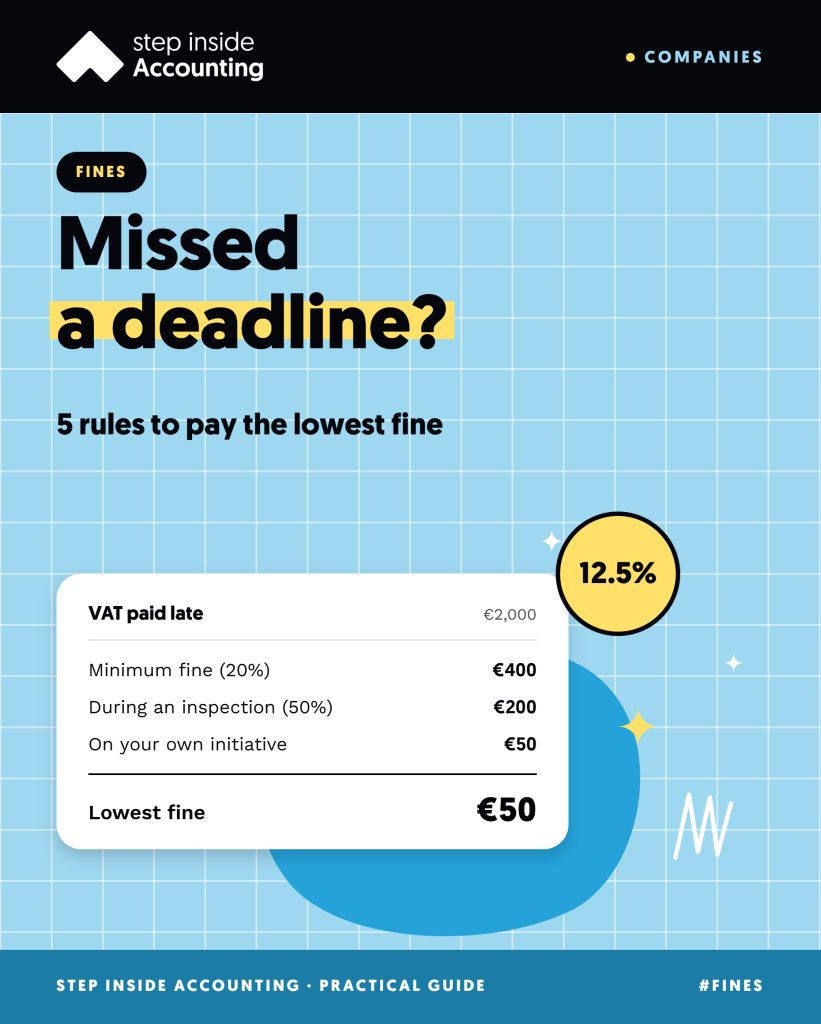
Filing a return or making a payment late happens. What makes the difference is what you do next: if you put things right on your own initiative, before the Tax Authority acts, you pay a fraction of the fine, and
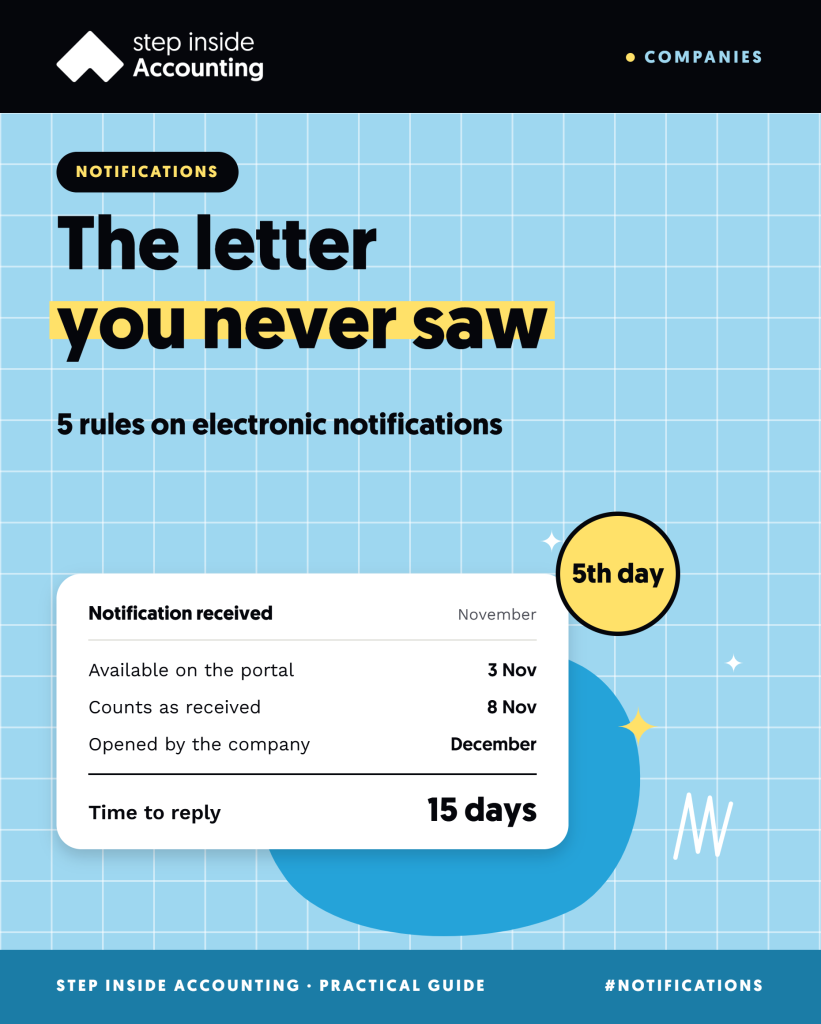
The Tax Authority and Social Security no longer send paper letters to companies. Notifications arrive electronically and count as received after a few days, whether you open them or not. A forgotten notice can mean a fine or a lost
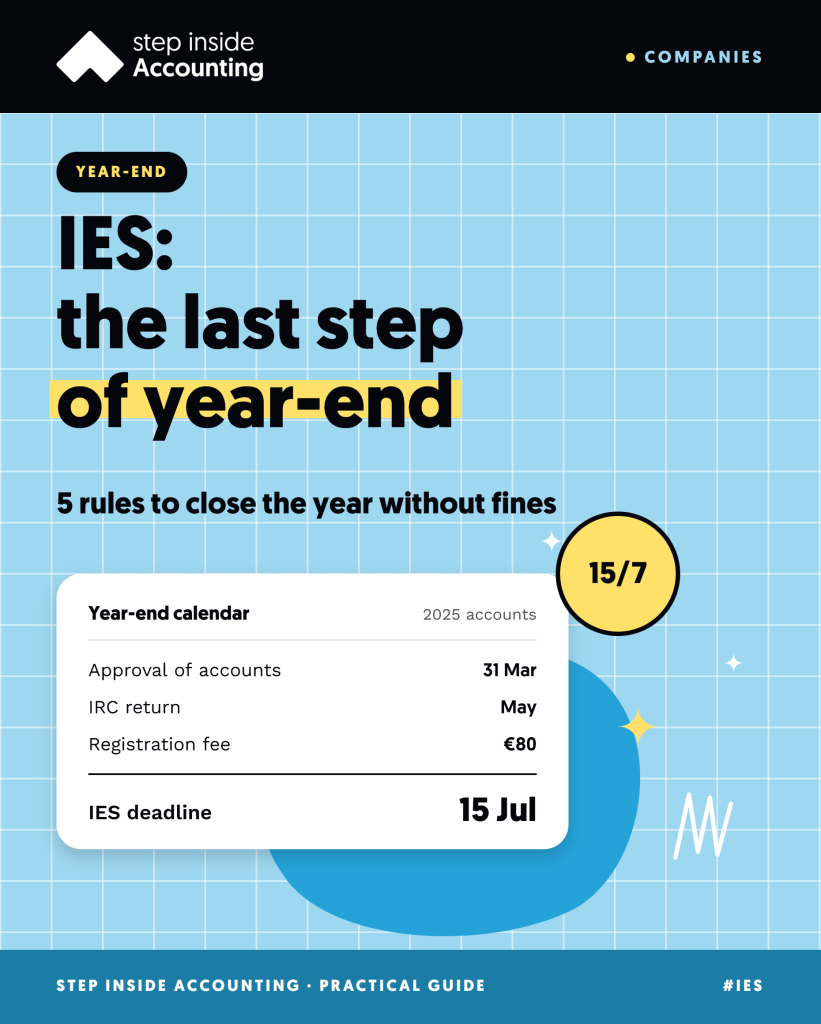
The IES is the last piece of the year-end close: a single return that sends the company’s accounts to the Tax Authority, the Commercial Registry, the National Statistics Institute (INE) and the Bank of Portugal. It must be filed by