Missed a deadline? 5 rules to pay the lowest possible fine

Filing a return or making a payment late happens. What makes the difference is what you do next: if you put things right on your own initiative, before the Tax Authority acts, you pay a fraction of the fine, and sometimes nothing at all.

Step Inside Accounting · Practical guide

#StepInsideAccounting

1. First, put it right

The reduced fine only applies if the situation is resolved: file the missing return or pay the overdue tax, with interest. Without that, there is no reduction.

When the issue was a return filed late, filing the return already counts as a request for the reduction. The Tax Authority then sends a notification with the reduced fine to pay.

2. Before the Tax Authority acts: 12.5% of the minimum

If you put things right before there is an official report, a complaint or an inspection, the fine drops to 12.5% of the legal minimum, always calculated as if the failure was due to negligence. The reduced fine is never below €25.

There are two conditions: pay the reduced fine within 30 days of the notification, and have the situation resolved within that same period. If you miss this, administrative offence proceedings are opened.

Example

The company paid €2,000 of VAT late. For a company, the minimum fine for late payment is 20% of the tax, that is €400. If it puts things right on its own initiative, it pays €50 (12.5% of €400), plus late-payment interest.

3. First slip in five years: there may be no fine

If, in the previous five years, the company has not been convicted of tax offences or benefited from a waiver or a reduced fine, the system can waive the fine automatically.

You can also ask for a waiver when the failure caused no loss to the State and has already been put right. This is done within the defence period, which is 30 days from the notification. Tax paid late always counts as a loss, so in that case this waiver does not apply.

4. During an inspection, there is still a reduction

If the failure is detected in an inspection, you can still ask for the reduction until the end of the period to respond to the draft report. In that case the fine is 50% of the legal minimum, provided you put the situation right within the deadline given.

That is still a big reduction, but it is four times what you would have paid if you had acted earlier.

5. Once proceedings are open, little is left

Once administrative offence proceedings are open, the head of the tax office sets the fine. The company can pay it within 15 days with a reduction to 75% of the amount set. That amount is never below the legal minimum, and the costs of the proceedings are added.

Alternatively, it has 30 days to pay the full amount or appeal to the tax court. If it neither pays nor appeals, the fine goes to tax enforcement.

Example

In the case of the €2,000 of VAT, if the company waits for the proceedings, the fine is set at €400 or more. Even paying within the 15 days, it pays at least €400 plus costs, instead of the €50 it would have paid by acting straight away.

Team tip

If you realise you have missed a deadline, tell us that same day. The sooner we put it right, the lower the fine. Often everything is settled with €25 or €50.

Want us to handle this for you?

Companies

Monthly accounting

Bookkeeping, tax obligations and managing partners’ salaries, all in one place.

€250 + VAT / month

business@stepinsideaccounting.com

Self-employed

Recibos verdes without the stress

Tax returns, VAT and Social Security handled by people who know the regime inside out.

from €80 + VAT / month

self-employee@stepinsideaccounting.com


This article is for information only and does not replace professional advice. Figures and rules are those in force at the date of publication and may change.

Explore more resources
Share with someone who needs it

Want to know more? Explore the other Step Inside Accounting resources

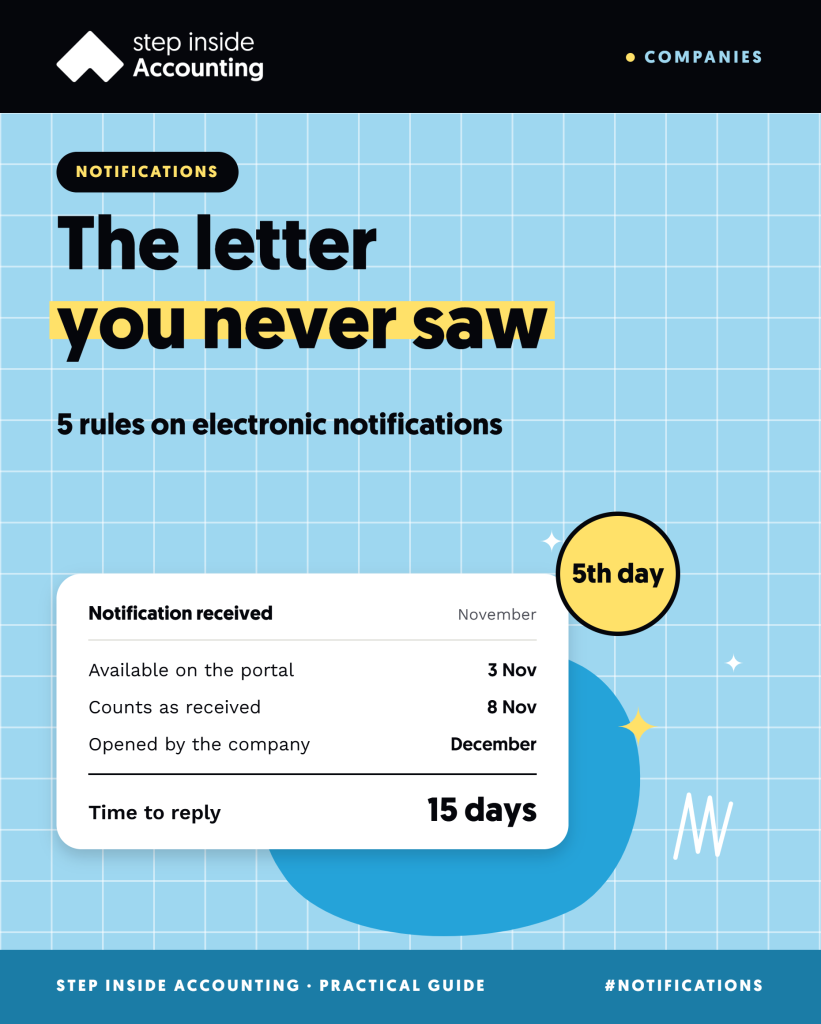
The Tax Authority and Social Security no longer send paper letters to companies. Notifications arrive electronically and count as received after a few days, whether you open them or not. A forgotten notice can mean a fine or a lost
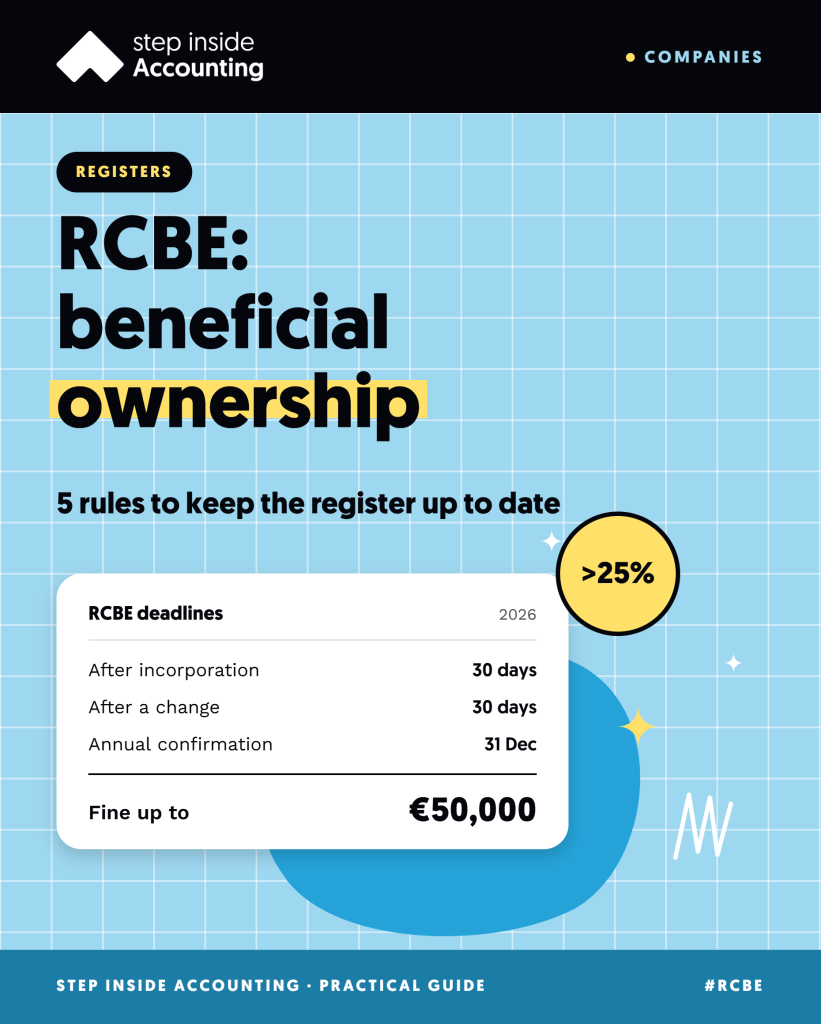
The RCBE identifies the people who, at the end of the chain, own or control the company. It must always be up to date: an unreported change stops the company from distributing profits and contracting with the State, and can
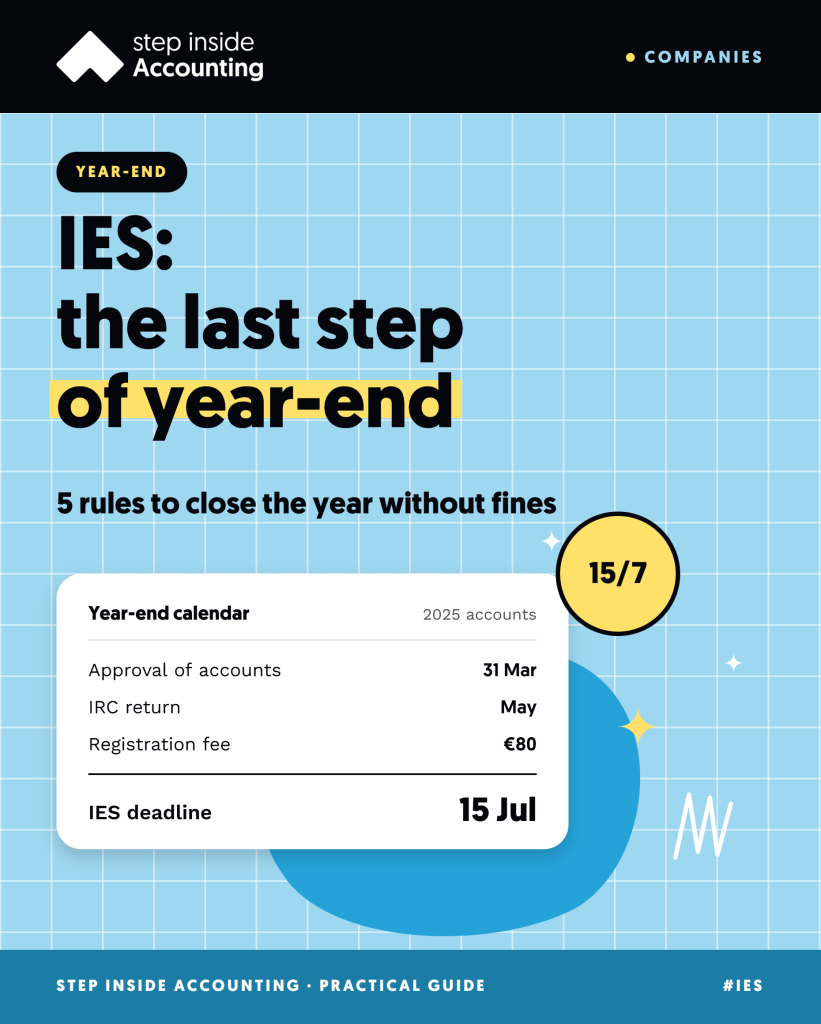
The IES is the last piece of the year-end close: a single return that sends the company’s accounts to the Tax Authority, the Commercial Registry, the National Statistics Institute (INE) and the Bank of Portugal. It must be filed by