Company car: electric, hybrid or combustion? 5 rules for choosing

For the same price, a petrol or diesel car can cost the company thousands of euros more a year than an electric one. The difference lies in autonomous taxation, the depreciation cap and VAT. Check the 2026 rules before you choose.

Step Inside Accounting · Practical guide

#StepInsideAccounting

1. The car pays a tax of its own: autonomous taxation

Expenses on passenger cars pay an extra corporate tax (IRC), called autonomous taxation (tributação autónoma). It is a percentage of all the car’s costs: depreciation or lease payments, fuel or electricity, insurance, maintenance, tolls and parking.

It is due even if the company makes no profit. The rate depends on the type of car and its purchase cost.

2. The 2026 rates

  • Combustion (including non-plug-in hybrids): 8% up to €37,500, 25% between €37,500 and €45,000, 32% from €45,000.
  • Plug-in hybrids that meet the electric range and emissions requirements, and natural gas cars: 2.5%, 7.5% and 15%, in the same brackets.
  • 100% electric: 0% up to €62,500 and 10% above that.

When the company has a tax loss, these rates usually go up by 10 points. In 2026, that increase is suspended for companies that meet certain conditions.

3. Depreciation has a cap

The car is depreciated at 25% a year, that is, over 4 years. But for IRC, depreciation only counts up to a maximum cost:

  • Combustion: €25,000.
  • Plug-in hybrid: €50,000.
  • Electric: €62,500.

On a €40,000 combustion car, the depreciation of the €15,000 above the cap does not reduce IRC, but it still pays autonomous taxation.

4. VAT changes everything

For VAT, the rule is simple: on a combustion car, the company recovers no VAT on the purchase or the lease. On an electric car up to €62,500, or a plug-in hybrid up to €50,000, it recovers all the VAT. Electricity is deductible; diesel gives 50% and petrol nothing.

The details, including leasing, renting and maintenance, are in our article on VAT on company cars.

5. Run the numbers before you buy

For the same price, the choice of engine can be worth thousands of euros a year. Before buying, compare the VAT you recover, the yearly autonomous taxation and the part of the depreciation that does not count.

Example

A car costing €40,000 + VAT (€9,200), with €12,000 of costs a year (€10,000 of depreciation and €2,000 of insurance, energy and maintenance):

  • Combustion: recovers €0 of VAT and pays €3,000 of autonomous taxation a year (25%). Only €6,250 of the yearly depreciation counts for IRC.
  • Plug-in hybrid: recovers €9,200 of VAT and pays €900 a year (7.5%).
  • Electric: recovers €9,200 of VAT and pays no autonomous taxation.

Team tip

Before you sign, send us the car or leasing quote. We will run the comparison for your case; sometimes the answer is to use your own car and claim mileage. A commercial van also pays no autonomous taxation.

Want us to handle this for you?

Companies

Monthly accounting

Bookkeeping, tax obligations and managing partners’ salaries, all in one place.

€250 + VAT / month

business@stepinsideaccounting.com

Self-employed

Recibos verdes without the stress

Tax returns, VAT and Social Security handled by people who know the regime inside out.

from €80 + VAT / month

self-employee@stepinsideaccounting.com


This article is for information only and does not replace professional advice. Figures and rules are those in force at the date of publication and may change.

Explore more resources
Share with someone who needs it

Want to know more? Explore the other Step Inside Accounting resources

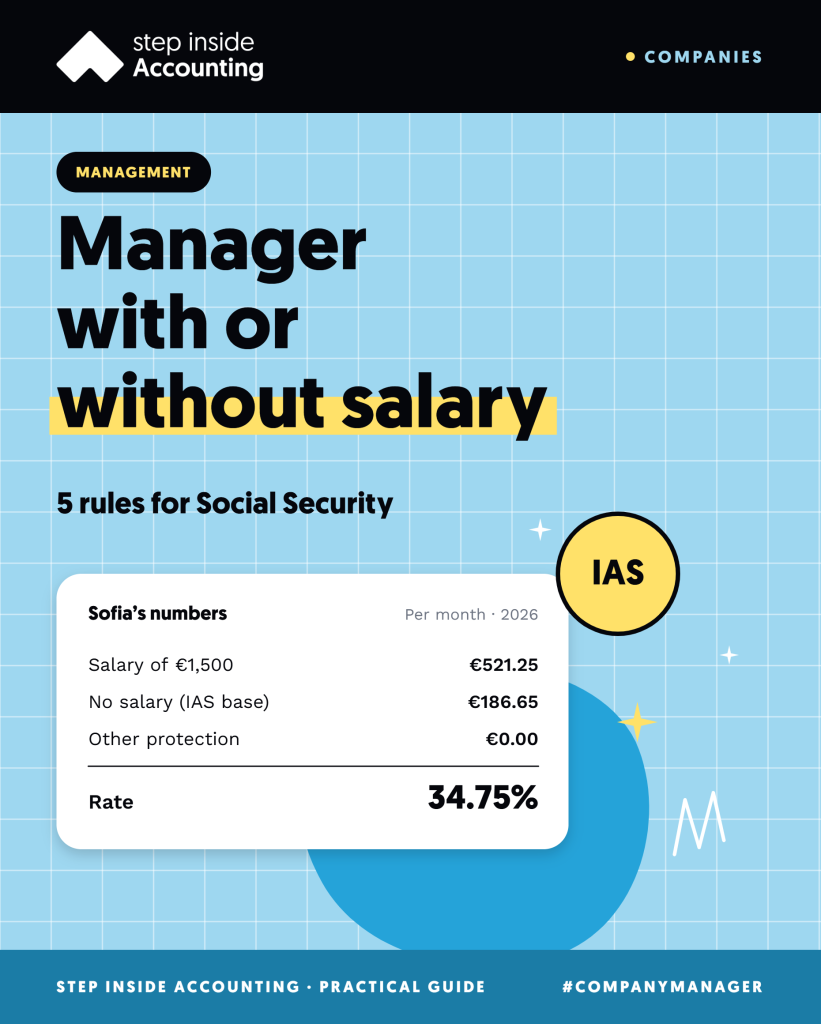
Many partner-managers decide not to take a salary to save on contributions. But being an unpaid manager does not, on its own, mean not paying Social Security. It all depends on whether or not you have other mandatory social protection,
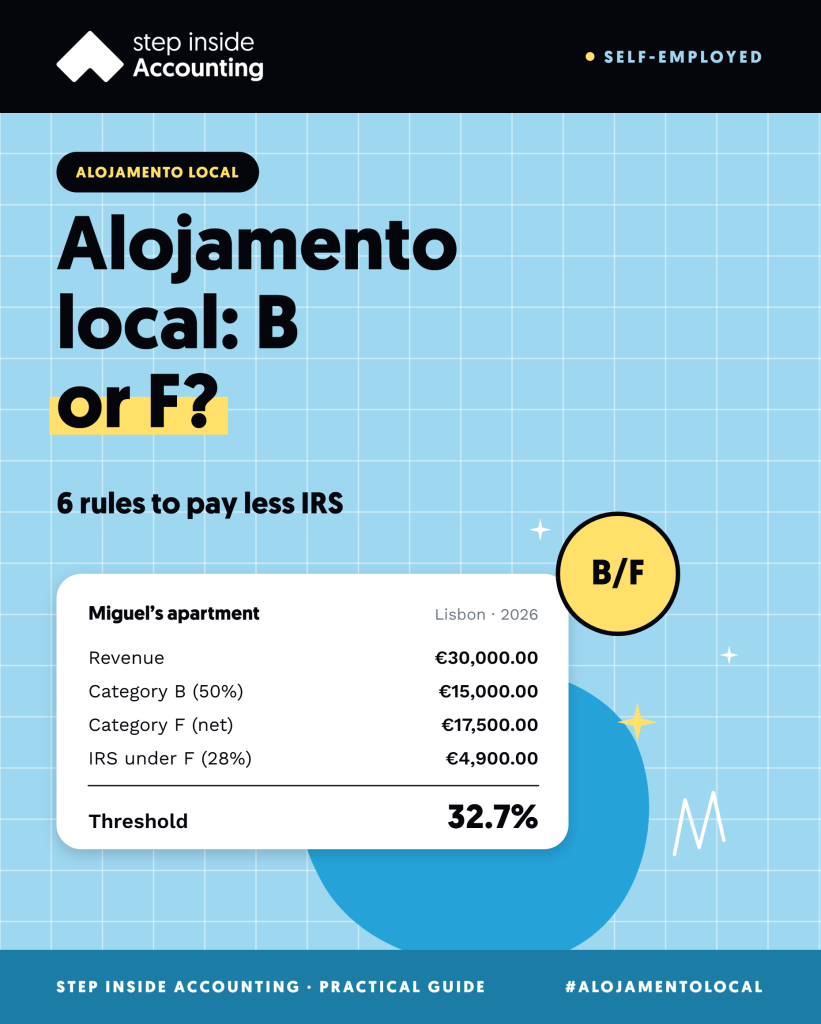
If you have a house or an apartment in alojamento local (short-term rental), you can choose every year how you pay IRS: as a self-employed worker, on a fixed percentage of what you receive, or as if it were rent,
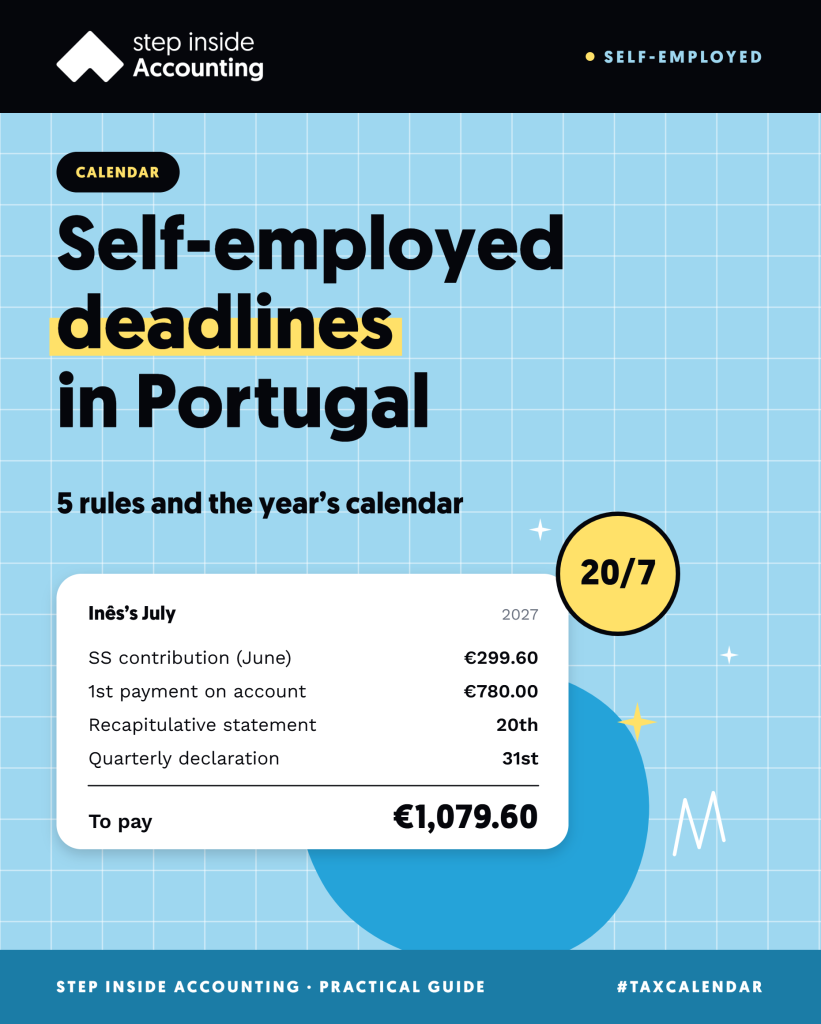
Issuing recibos verdes is the easy part. What takes work are the deadlines: the tax authority (Finanças) and Social Security, every month, every quarter and every year. We have put everything in one place, with the year's calendar, so you