VAT on company cars: 5 rules on what your company can deduct

For VAT, a petrol car, an electric car and a commercial van are three different worlds. Choosing the right car can mean recovering thousands of euros of VAT, or none at all.

Step Inside Accounting · Practical guide

#StepInsideAccounting

1. Petrol, diesel and standard hybrids: no VAT on the purchase

For passenger cars running on petrol, diesel or non-plug-in hybrids, the company cannot deduct the VAT (IVA) on the purchase, leasing, rental, maintenance, repairs or tolls.

The only exception is companies whose business is selling or renting cars. For everyone else, the VAT on these cars is a cost.

2. Electric cars: full VAT, up to €62,500

On a 100% electric car, the company deducts all the VAT on the purchase or leasing, as long as the price before VAT, including extras, does not exceed €62,500. The limit is all or nothing: above it, no VAT at all can be deducted.

The VAT on the electricity used to charge the car is also deductible. Maintenance and repairs still give no deduction.

Example

An electric car for €45,000 + €10,350 of VAT: the company recovers the €10,350. If the same car, with extras, cost €63,000 before VAT, the company would recover nothing.

3. Plug-in hybrids and LPG or natural gas cars

  • Plug-in hybrids: the VAT on the purchase or leasing is fully deductible if the price before VAT does not exceed €50,000. The charging electricity is also deductible; the fuel follows the fuel rule (see rule 5).
  • LPG or natural gas: 50% of the VAT on the purchase or leasing is deductible if the price before VAT does not exceed €37,500 and the vehicle registration document shows that fuel.

As with electric cars, the limits are all or nothing, and maintenance and repairs give no deduction.

4. Commercial vans: VAT deductible

For vehicles with 2 or 3 seats, including the driver, used to carry goods or for the company’s work, the VAT on the purchase, leasing, maintenance, repairs and tolls is deductible.

What counts is the number of seats and the use, not what the registration document says: a vehicle classed as “goods” but with more than 3 seats gives no deduction. Double-cab pick-ups are also excluded.

5. Fuel, electricity and personal use

For fuel, the rule is the same for all light vehicles, vans included:

  • Petrol: 0% of the VAT deductible.
  • Diesel, LPG and natural gas: 50%.
  • Electricity for electric cars and plug-in hybrids: deductible.

If the car is also used privately, the deductible VAT has to be adjusted to the share of business use. And every invoice, from the purchase to the fuel, must be in the company’s name.

Example

The company spends €150 a month on diesel, with €28.05 of VAT. It deducts half, €14.03. With petrol, it would deduct nothing.

Team tip

Before buying or leasing a car through the company, send us the quote. The price before VAT, the extras and the type of engine decide whether the company recovers all the VAT or none, and for corporate tax (IRC) the car also carries autonomous taxation, with its own rules.

Want us to handle this for you?

Companies

Monthly accounting

Bookkeeping, tax obligations and managing partners’ salaries, all in one place.

€250 + VAT / month

business@stepinsideaccounting.com

Self-employed

Recibos verdes without the stress

Tax returns, VAT and Social Security handled by people who know the regime inside out.

from €80 + VAT / month

self-employee@stepinsideaccounting.com


This article is for information only and does not replace professional advice. Figures and rules are those in force at the date of publication and may change.

Explore more resources
Share with someone who needs it

Want to know more? Explore the other Step Inside Accounting resources

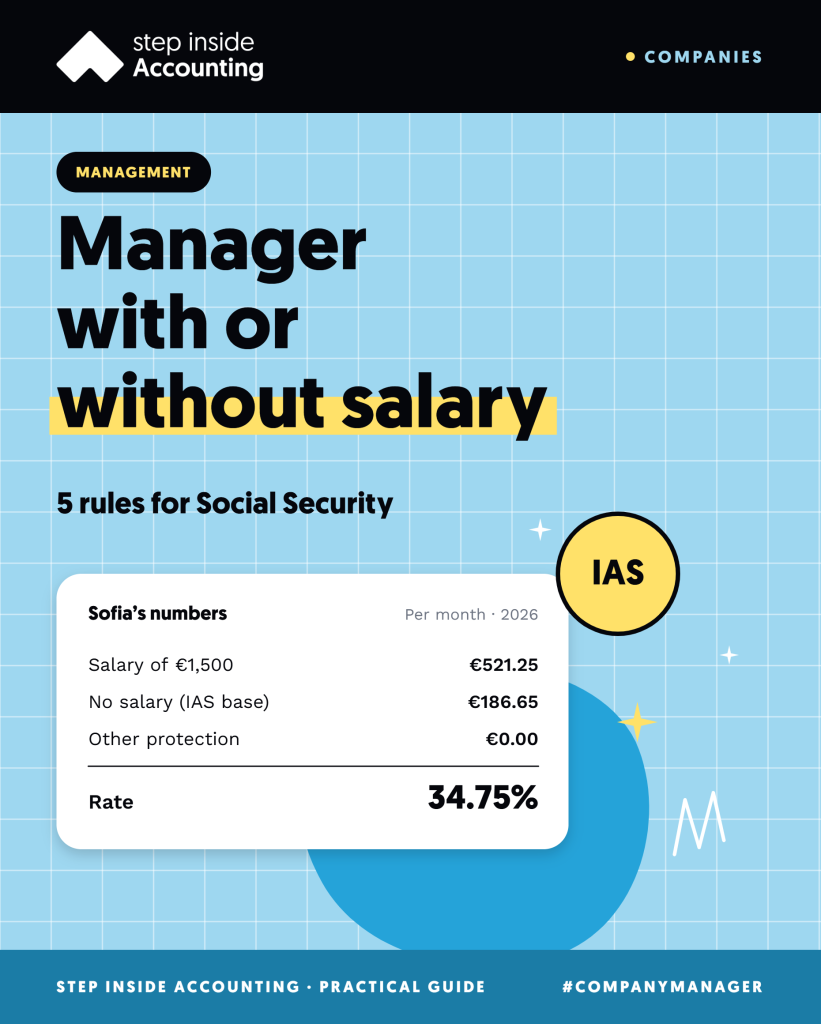
Many partner-managers decide not to take a salary to save on contributions. But being an unpaid manager does not, on its own, mean not paying Social Security. It all depends on whether or not you have other mandatory social protection,
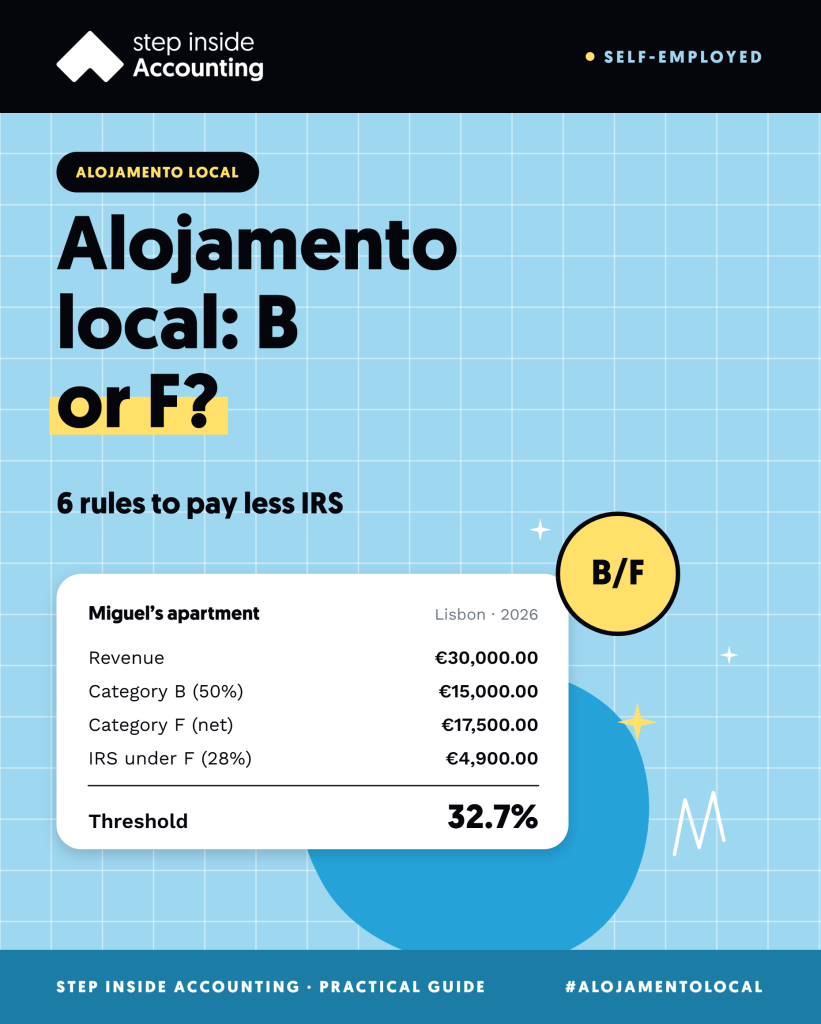
If you have a house or an apartment in alojamento local (short-term rental), you can choose every year how you pay IRS: as a self-employed worker, on a fixed percentage of what you receive, or as if it were rent,
Issuing recibos verdes is the easy part. What takes work are the deadlines: the tax authority (Finanças) and Social Security, every month, every quarter and every year. We have put everything in one place, with the year's calendar, so you