How Long to Keep Your IRS Documents in Portugal (Article 128)
Blog Post
Tax, Live in Portugal
How Long to Keep Your IRS Documents in Portugal (Article 128)
You’ve filed your IRS return — can you throw away the receipts? Not yet. Article 128 of the IRS Code requires taxpayers to keep and present the documents supporting their return if the tax authority asks. This guide is for individuals without self-employed activity — employees, pensioners, landlords and investors.
Capital gains: purchase and sale deeds, invoices for improvement works, broker statements
Deductions: invoices not on e-Fatura (for example, foreign health or education expenses), proof of rent paid, alimony court decisions
Residency: proof of arrival or departure dates, tax residence certificates
Special regimes: documents for IFICI, NHR, IRS Jovem or the ex-resident regime
⏳ When to Keep Them Longer
The four-year rule is the minimum. Keep documents longer when:
Property: keep the purchase deed and invoices for works for as long as you own the property, and for four years after the sale — they determine the capital gain
Shares and other investments: keep purchase records until the sale (and four years after)
Tax havens: the audit period can be up to 12 years
Losses carried forward: keep the documents for the whole carry-forward period
Special regimes lasting several years (IFICI, NHR, IRS Jovem)
💻 Paper or Digital?
Digital copies are generally accepted, as long as they’re legible and complete. Many documents are already on the Portal das Finanças (e-Fatura, income statements), but foreign documents aren’t — keep them yourself.
⚠️ What If You Can't Present Them?
The tax authority may disallow deductions or correct your income
You may face additional tax, interest and fines
If documents were lost for reasons beyond your control (fire, theft), you can use other evidence
💡 Practical Tips
Create a folder per tax year (digital and/or paper).
Save foreign documents as soon as you receive them.
Keep property documents in a separate permanent file.
Back up digital files.
🚀 Final Considerations
The law requires four years, but the documents that prove your acquisition values, losses or special regimes often need to be kept much longer. Good organisation saves time — and money — if the tax authority ever asks.
📢 Expert Advice: Keep property and investment purchase documents for as long as you own the asset. They’re what reduce the tax when you sell.
If you pay someone to clean your home in Portugal, you're their employer — even if they only come a few hours a week. Here's how to register them with Social Security, how much you'll pay in contributions, what you
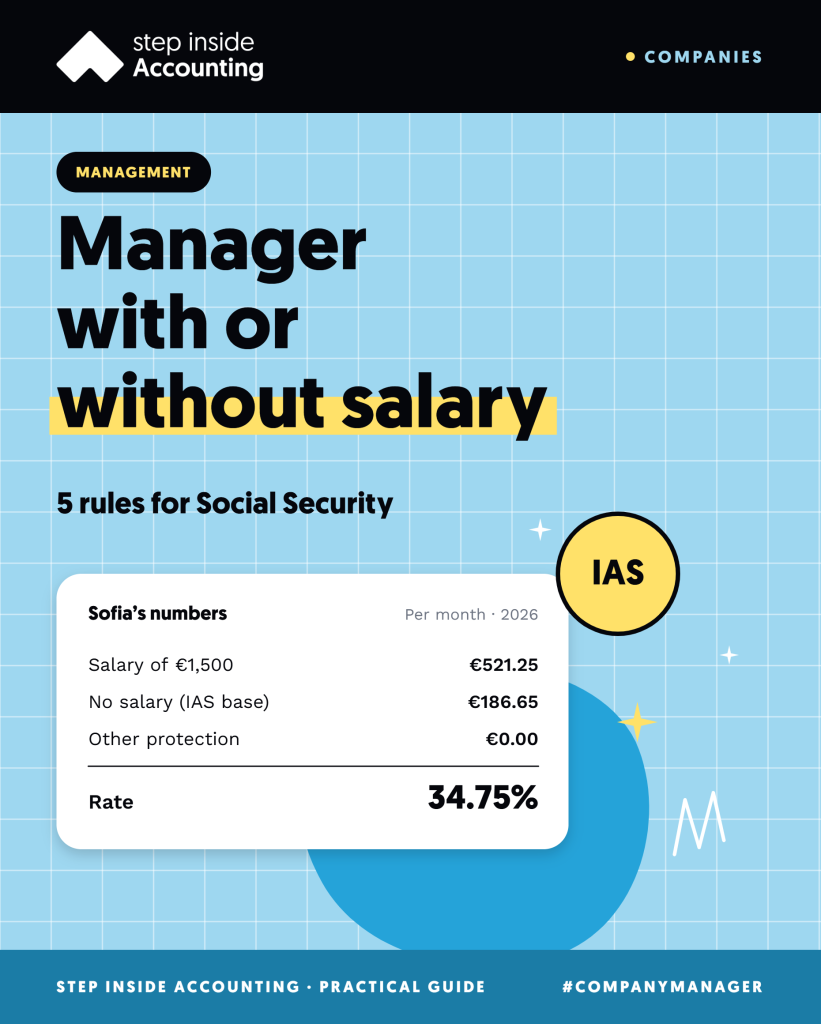
Many partner-managers decide not to take a salary to save on contributions. But being an unpaid manager does not, on its own, mean not paying Social Security. It all depends on whether or not you have other mandatory social protection,
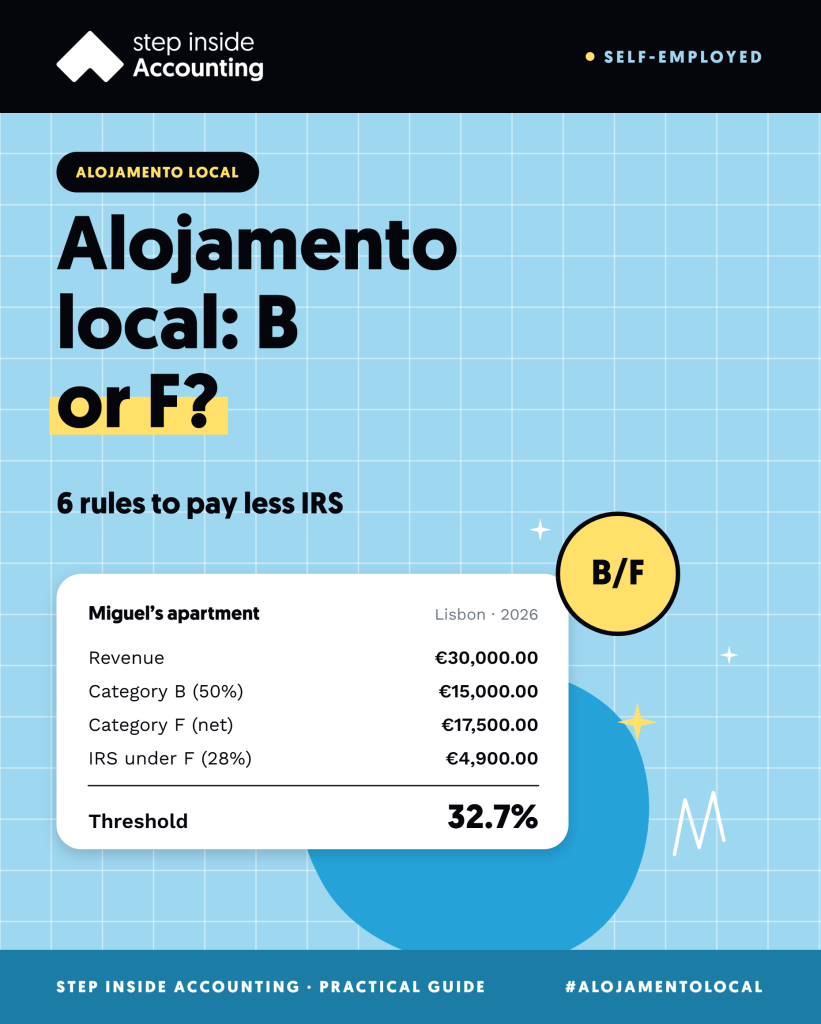
If you have a house or an apartment in alojamento local (short-term rental), you can choose every year how you pay IRS: as a self-employed worker, on a fixed percentage of what you receive, or as if it were rent,