


Statute of Limitations in Portuguese Tax Law: Caducidade vs Prescrição
“How long can the Tax Authority come after me?” It’s one of the most common questions in Portuguese tax law — and the answer involves two different concepts that are often confused: caducidade and prescrição. Both are set out in the General Tax Law (LGT). Here’s what each one means and why the difference matters.
Fiscal Representative in Portugal: When Is It Mandatory?

If you have a Portuguese tax number (NIF) but live abroad, you may have heard that you need a fiscal representative. But is it always mandatory? The rules changed in 2022, and today the answer depends on where you live and what kind of tax relationship you have with Portugal. Here’s what the General Tax Law (LGT) says.
IMT and IMI Exemptions for Urban Rehabilitation in Portugal
Buying an old property to renovate? Portugal offers generous tax benefits for urban rehabilitation — including IMT exemptions on the purchase and on the first sale after the works, and IMI exemptions for several years. But the rules are strict, and many people lose the benefits because of small details. Here’s how they work.
Usufruct and Bare Ownership in Portugal: IMT and Stamp Duty Explained
Selling a property while keeping the right to live in it, buying the bare ownership as an investment, or splitting ownership between parents and children — usufruct (usufruto) and bare ownership (nua propriedade) are common in Portugal. But are these operations subject to IMT and Stamp Duty? Yes — and the value is calculated in a special way. Here’s how.
Buying a Home in Portugal: Why the Registered Use in the Caderneta Predial Affects Your IMT
You’ve found the perfect apartment — it looks like a home, it’s sold as a home, and you plan to live in it. But when you check the caderneta predial, the registered use says “services”. That small detail can make your IMT much higher than expected. Here’s why the registered use matters and what to check before you buy.
IMT Jovem: The IMT and Stamp Duty Exemption for Young Buyers
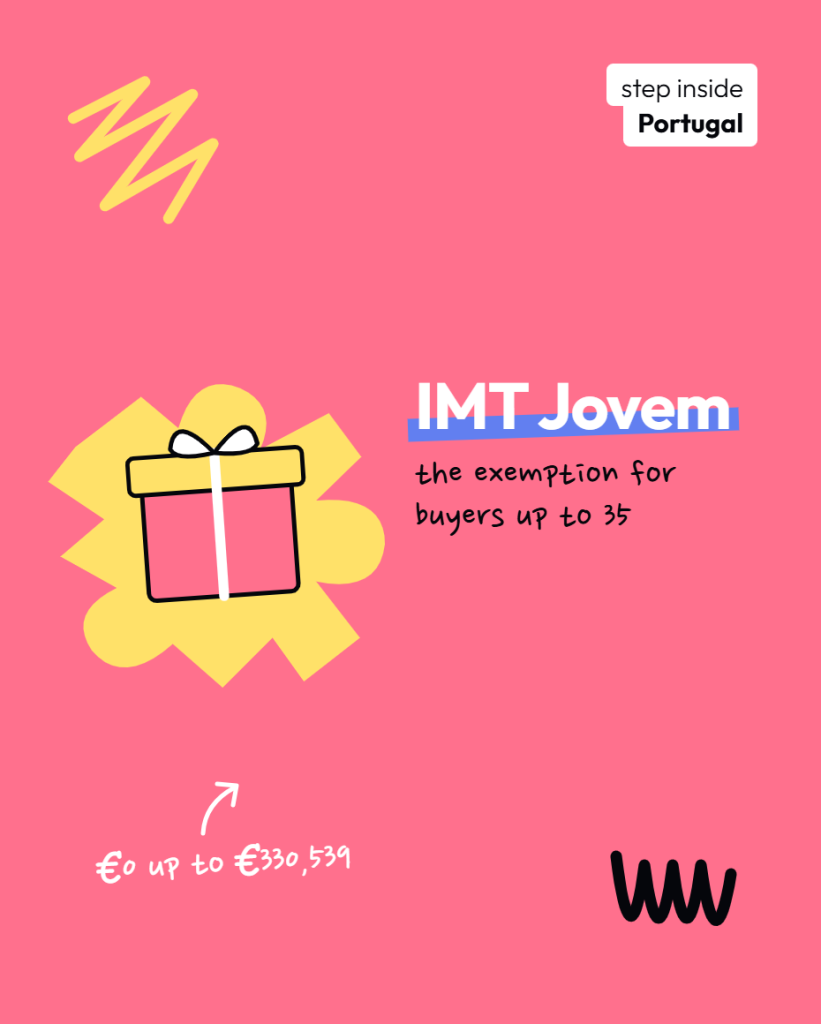
Are you 35 or younger and buying your first home in Portugal? Then you may not have to pay IMT or Stamp Duty — or pay much less. The IMT Jovem exemption, introduced in August 2024, can save you thousands of euros. Here’s how it works in 2026.
IMT: Purchase Price or VPT — Which Value Is Used?
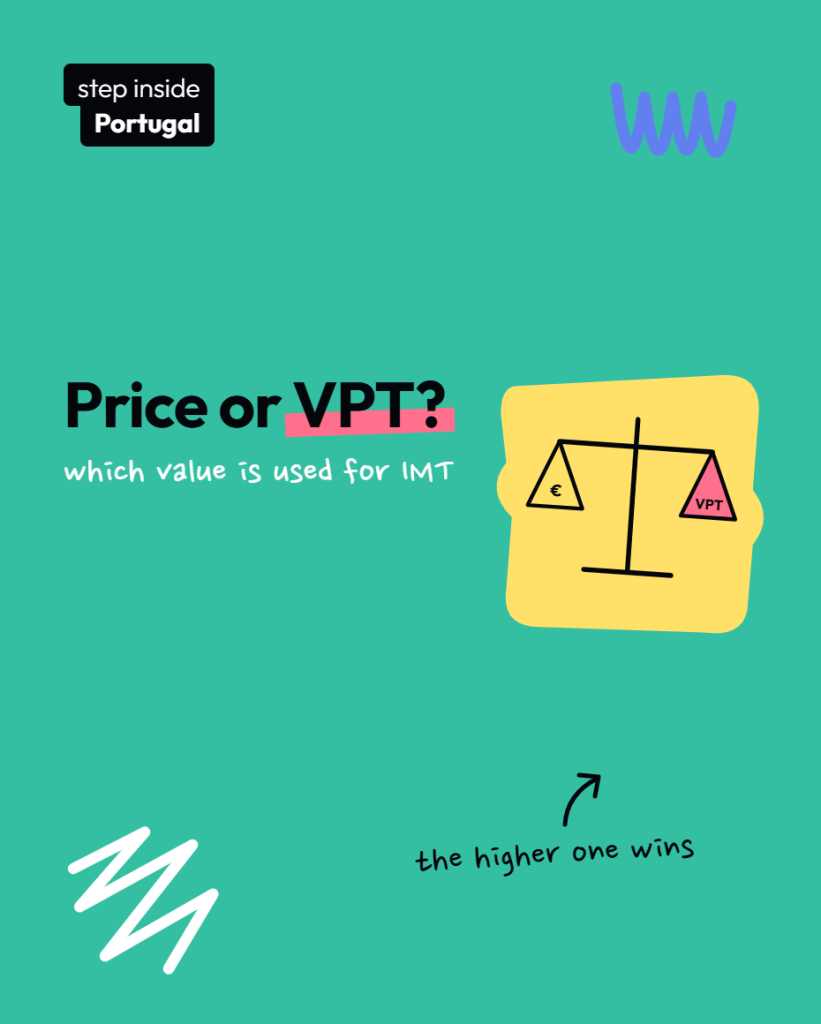
You’ve agreed a price for a property — but the IMT you pay may be calculated on a different value. In Portugal, IMT (and Stamp Duty) are calculated on the higher of the purchase price or the property’s tax value (VPT). Here’s how it works, what happens when the price is below the VPT and why it matters for the future.
CPCV and IMT: When Is IMT Due on a Promissory Contract?
Most property purchases in Portugal start with a CPCV — the promissory purchase and sale contract. Usually, IMT is only paid just before the final deed. But in some situations, IMT becomes due when the CPCV is signed or soon after. The key concept is the “tradição” rule. Here’s what it means and how to avoid surprises.
Buying a Home in Portugal: IMT Rates for Every Situation (2026)
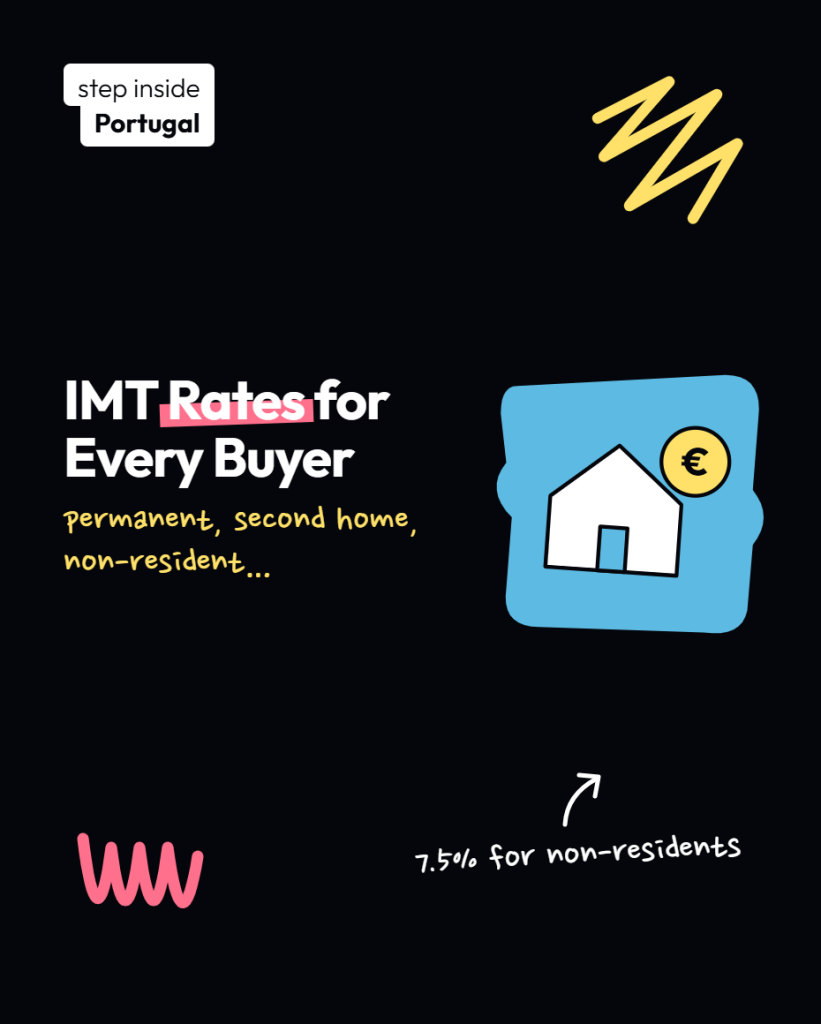
How much IMT you pay when buying property in Portugal depends on who you are and what you’re buying: a permanent home, a second home, a rural property — and whether you’re resident, non-resident or linked to a tax haven. Here are the IMT rates for each situation in 2026 (mainland Portugal), plus the Stamp Duty you’ll pay on top.
IMT in Portugal: What It Is and Which Transactions Are Taxed
Buying property in Portugal? Then you’ll meet the IMT — usually the biggest tax you pay when you buy. But IMT doesn’t only apply to traditional purchases: it can also be due on promissory contracts, company shares, swaps and more. Here’s what IMT is and which transactions are subject to it.