VAT refunds: 5 rules for getting back the VAT your company is owed
Blog Post
Step Inside Accounting, Company
VAT refunds: 5 rules for getting back the VAT your company is owed
When the company pays more VAT on its purchases than it charges on its sales, it has VAT to recover. It can use it in the following returns or ask the Tax Authority for a refund. The request is simple; what takes time is the check that follows.
It happens whenever the VAT (IVA) on purchases is higher than the VAT on sales. The most common cases are:
Starting the business, with investment in equipment and building works.
Sales to clients outside Portugal, invoiced without VAT, while the expenses carry VAT.
A large purchase, such as a commercial vehicle or machinery.
If you do not ask for a refund, the amount automatically carries over to the next return and is offset against the VAT payable.
2. When you can ask for a refund
There are three situations:
After 12 months since the company first had VAT to recover, if the amount is still more than €250.
At any time, if the VAT to recover is more than €3,000.
When the business closes, if the amount is at least €25.
Companies that have VAT to recover almost every month, such as those that sell mainly outside Portugal, can apply for the monthly refund scheme, which is faster.
Example
A company selling services to clients in the US bought equipment in the first quarter and has €4,200 of VAT to recover. As that is over €3,000, it can ask for the refund in that quarter’s return instead of waiting 12 months.
3. How to ask for it
The request is made in the periodic VAT return itself, in the refund section, by stating the amount. There is no separate form.
Before you ask, make sure that:
All previous returns and payments are up to date.
The company’s IBAN is registered on the Portal das Finanças.
Sales invoices have been reported to the Tax Authority and match the VAT declared.
4. How long it takes
The Tax Authority has until the end of the second month after the request to pay, or 30 days under the monthly refund scheme. If it pays late, the company can claim interest. For refunds above €30,000, the Tax Authority may ask for a bank guarantee.
Example
The request goes in the first-quarter return, filed in May. If everything is in order, the refund should arrive by the end of July.
5. What the Tax Authority checks
A refund request is one of the moments when the Tax Authority looks most closely at the company. It checks that the VAT declared matches the invoices reported by clients and suppliers, that the tax numbers (NIF) are valid and that the VAT deducted is really deductible.
It is normal for it to ask for invoices, contracts or bank statements, and sometimes it carries out an inspection. Any difference delays the refund until it is explained, and VAT deducted without the right to do so is cut.
Team tip
Before you ask for a refund, we review the period’s invoices and the company’s e-Fatura records with you. A well-prepared request is paid faster and avoids arguments about VAT that should never have been deducted.
Want us to handle this for you?
Companies
Monthly accounting
Bookkeeping, tax obligations and managing partners’ salaries, all in one place.
This article is for information only and does not replace professional advice. Figures and rules are those in force at the date of publication and may change.
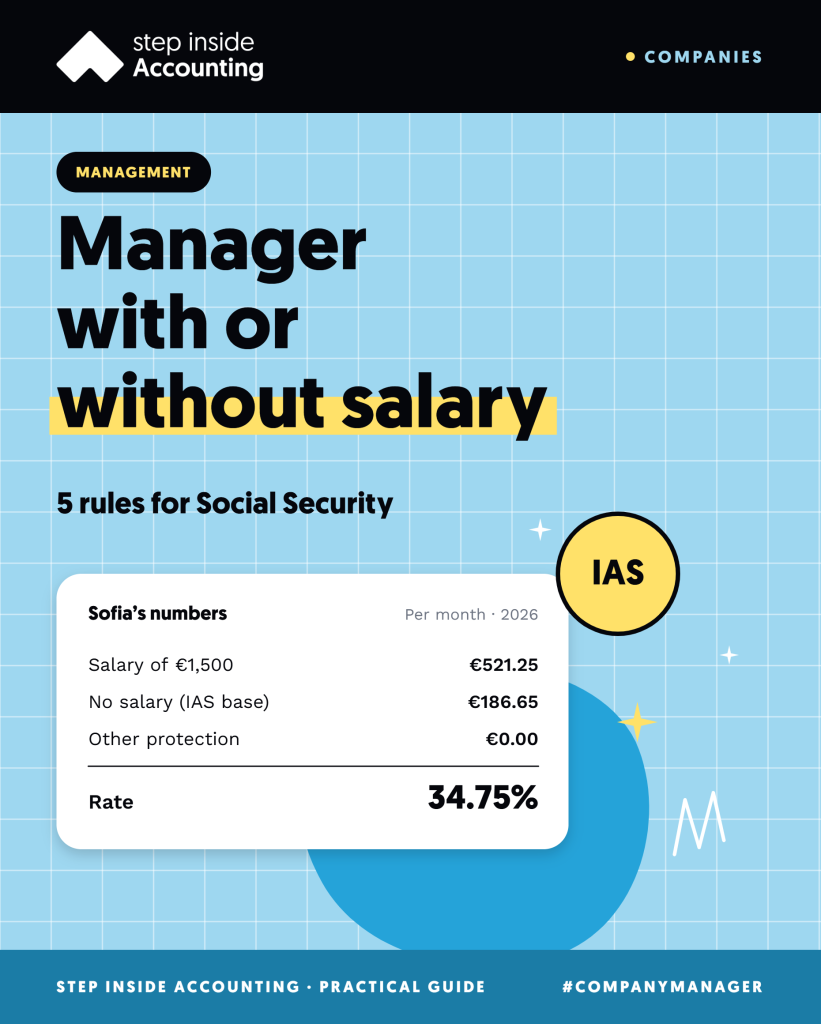
Many partner-managers decide not to take a salary to save on contributions. But being an unpaid manager does not, on its own, mean not paying Social Security. It all depends on whether or not you have other mandatory social protection,
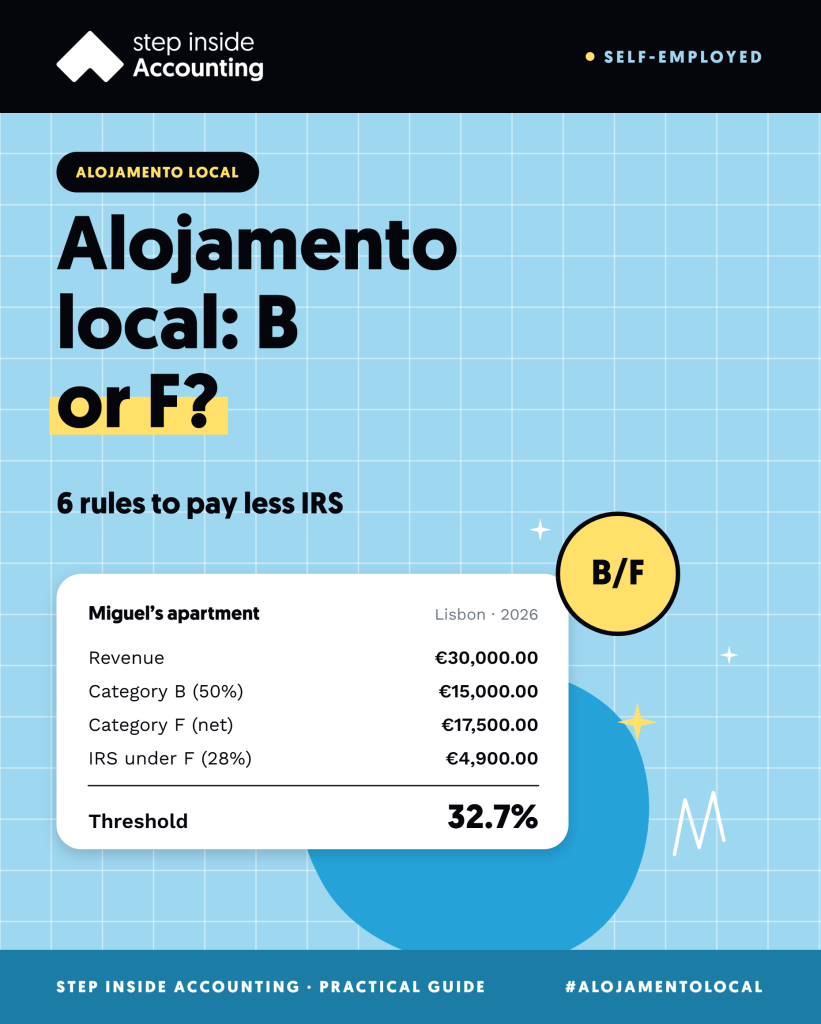
If you have a house or an apartment in alojamento local (short-term rental), you can choose every year how you pay IRS: as a self-employed worker, on a fixed percentage of what you receive, or as if it were rent,
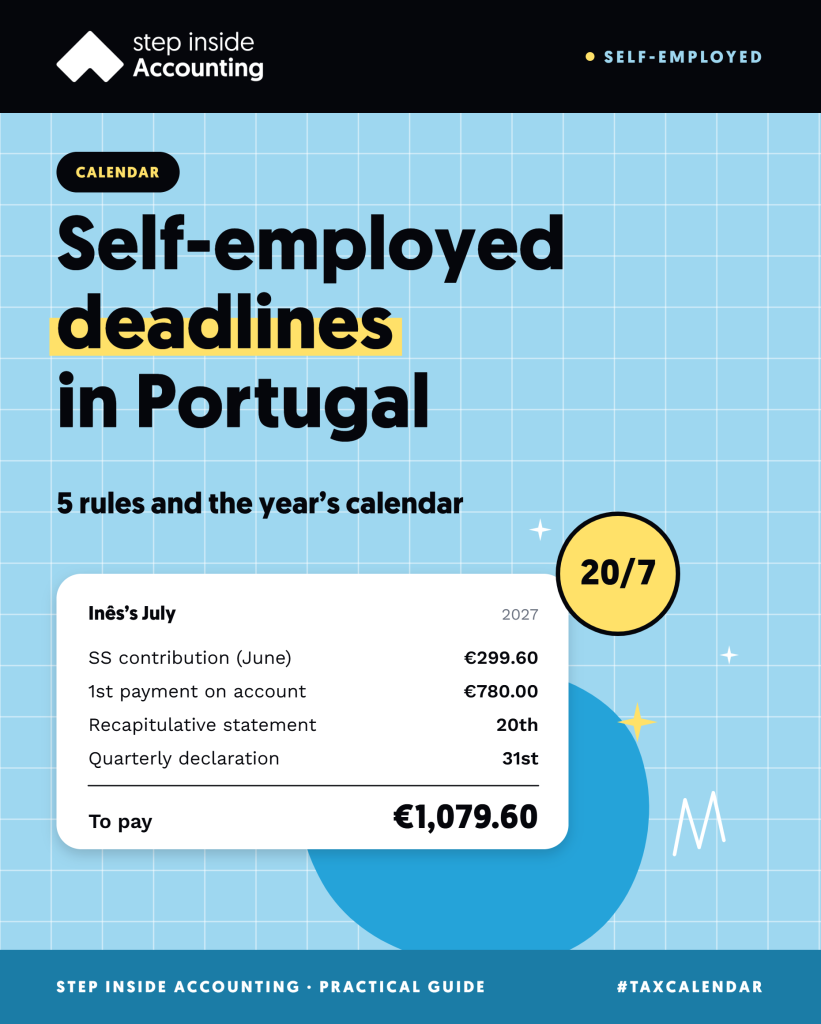
Issuing recibos verdes is the easy part. What takes work are the deadlines: the tax authority (Finanças) and Social Security, every month, every quarter and every year. We have put everything in one place, with the year's calendar, so you