


Alojamento local: Category B or Category F? 6 rules to choose the option with the lowest IRS
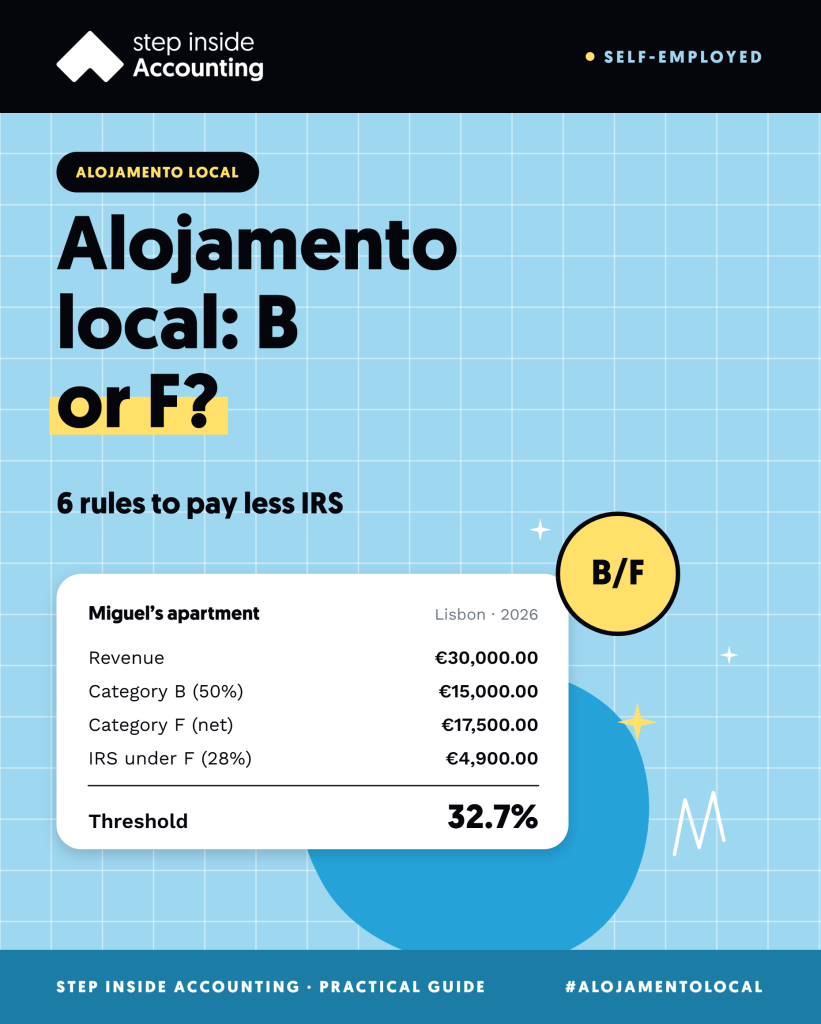
If you have a house or an apartment in alojamento local (short-term rental), you can choose every year how you pay IRS: as a self-employed worker, on a fixed percentage of what you receive, or as if it were rent, on income minus expenses. The choice is made in the IRS return and can change from year to year. But first of all, it matters who holds the operation. These are the six rules to get the numbers right.
Self-employed in Portugal: 5 rules and a calendar so you never miss a deadline
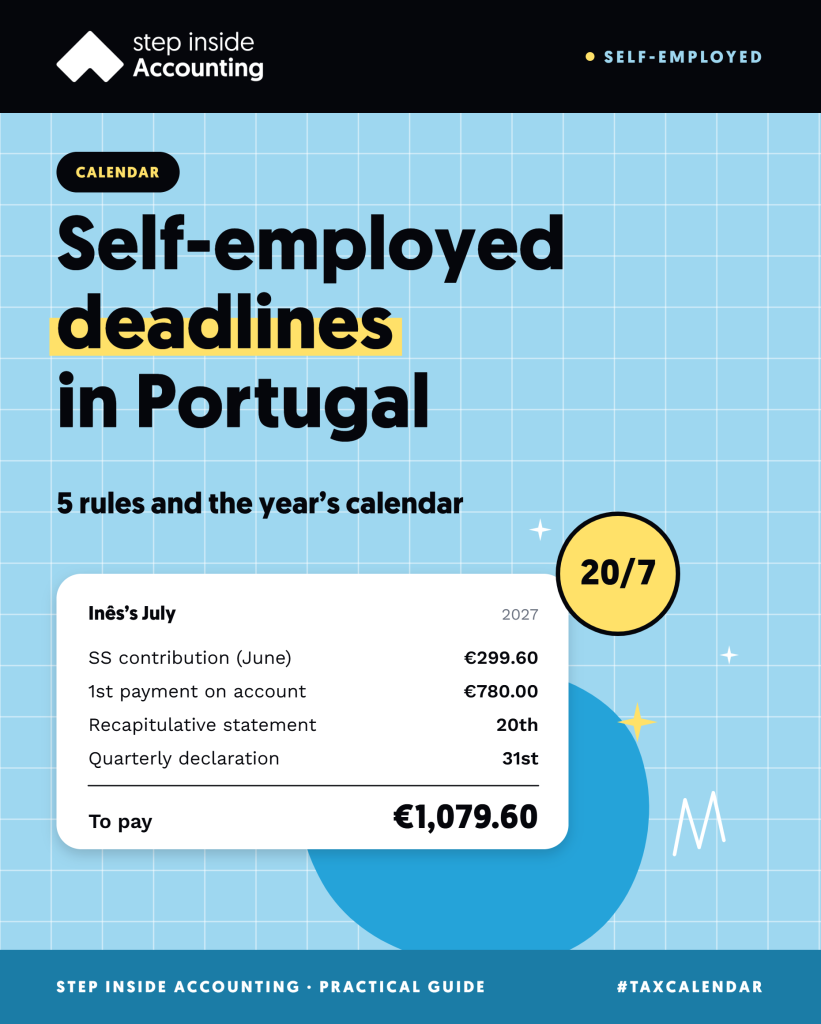
Issuing recibos verdes is the easy part. What takes work are the deadlines: the tax authority (Finanças) and Social Security, every month, every quarter and every year. We have put everything in one place, with the year’s calendar, so you know what to do and when.
Social Security quarterly declaration: 5 rules to submit it on time and without mistakes
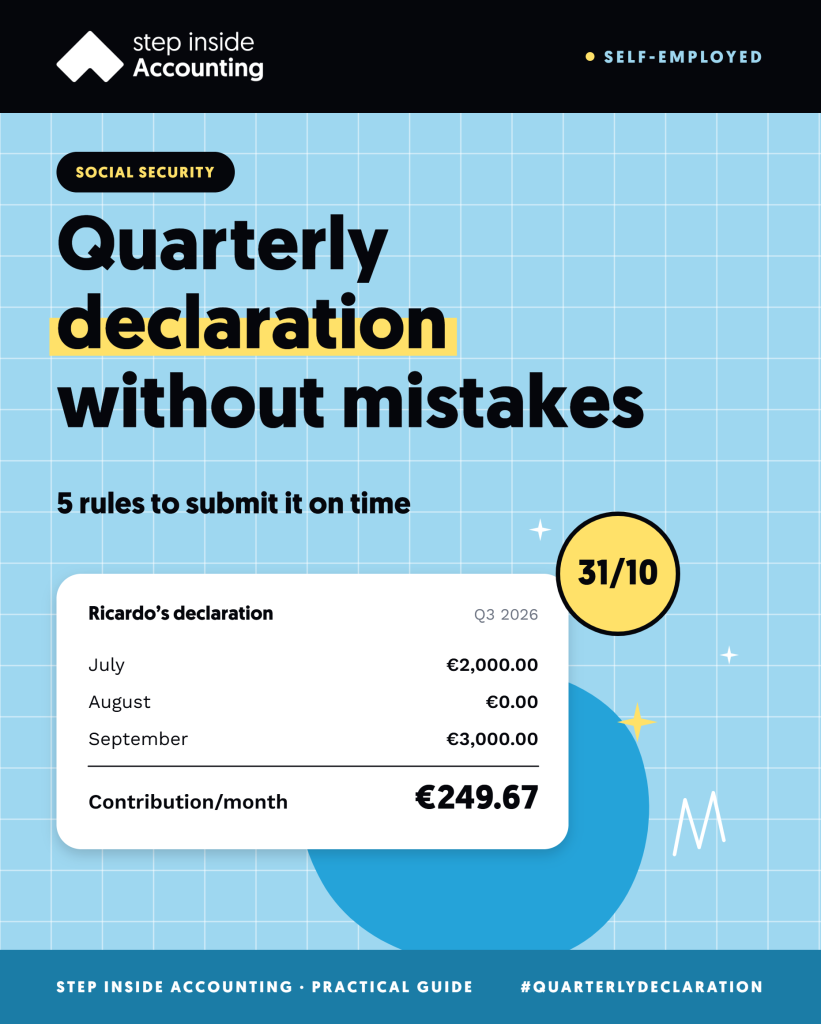
Four times a year, self-employed workers tell Social Security how much they invoiced in the previous three months. That figure is used to calculate the contributions for the next three months. It takes five minutes, but forgetting it or getting a figure wrong can lead to a fine or overdue contributions. These are the five rules.
Social Security on recibos verdes: 5 rules to know when you start paying and how much
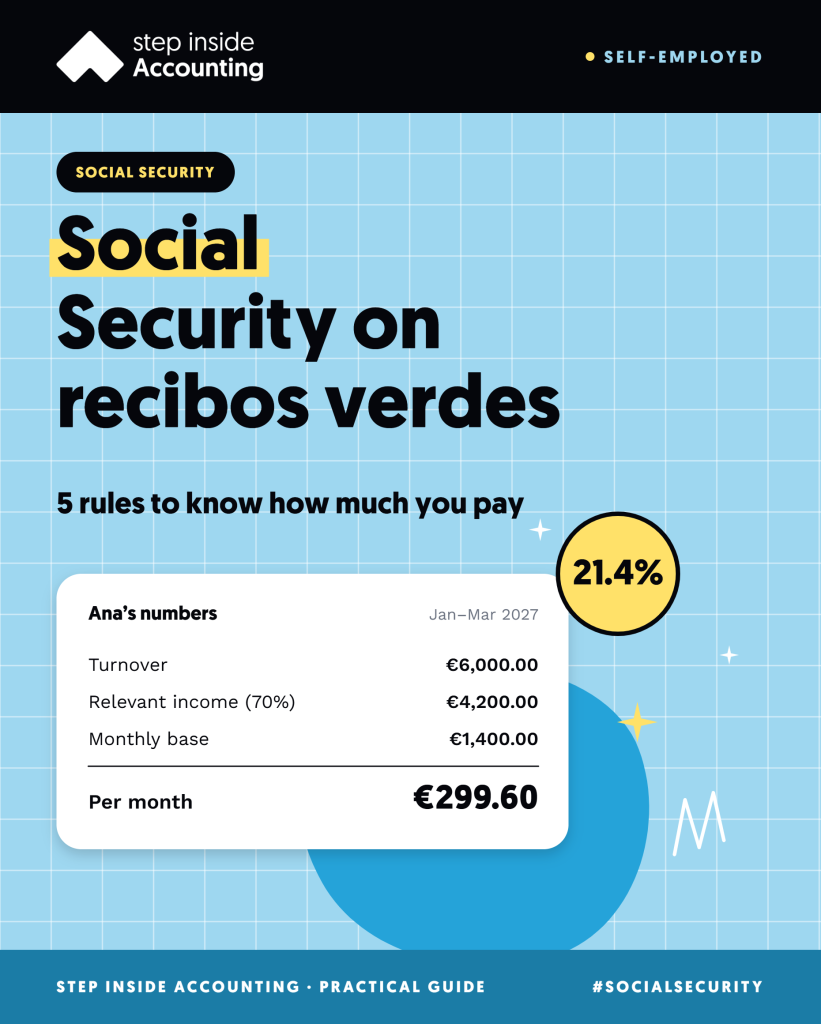
Anyone opening an activity for the first time gets a year without contributions. After that, you pay every month an amount calculated from what you invoiced in the previous quarter. Understanding the calculation helps you set money aside, choose the right base and know when you are exempt. These are the five rules.
Tax transparency: 5 rules to understand when your company pays no IRC and the profit goes straight into your IRS
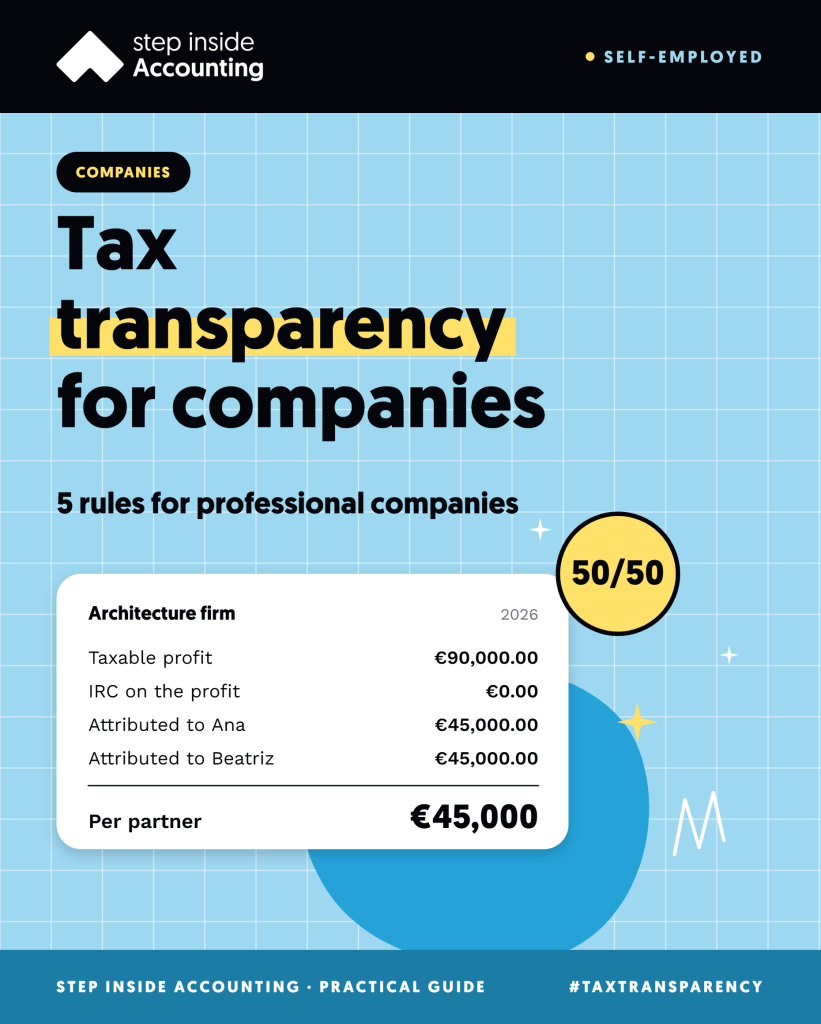
Many professionals – lawyers, architects, doctors, consultants – move from recibos verdes to a company with colleagues. But some of these companies do not pay IRC (corporate income tax): the profit is attributed to the partners and taxed in their IRS, even if it stays in the company. This is tax transparency. These are the five rules to understand whether it applies to you and what changes.
Copyright income and IRS: 5 rules to know how it is taxed and how to pay tax on only half
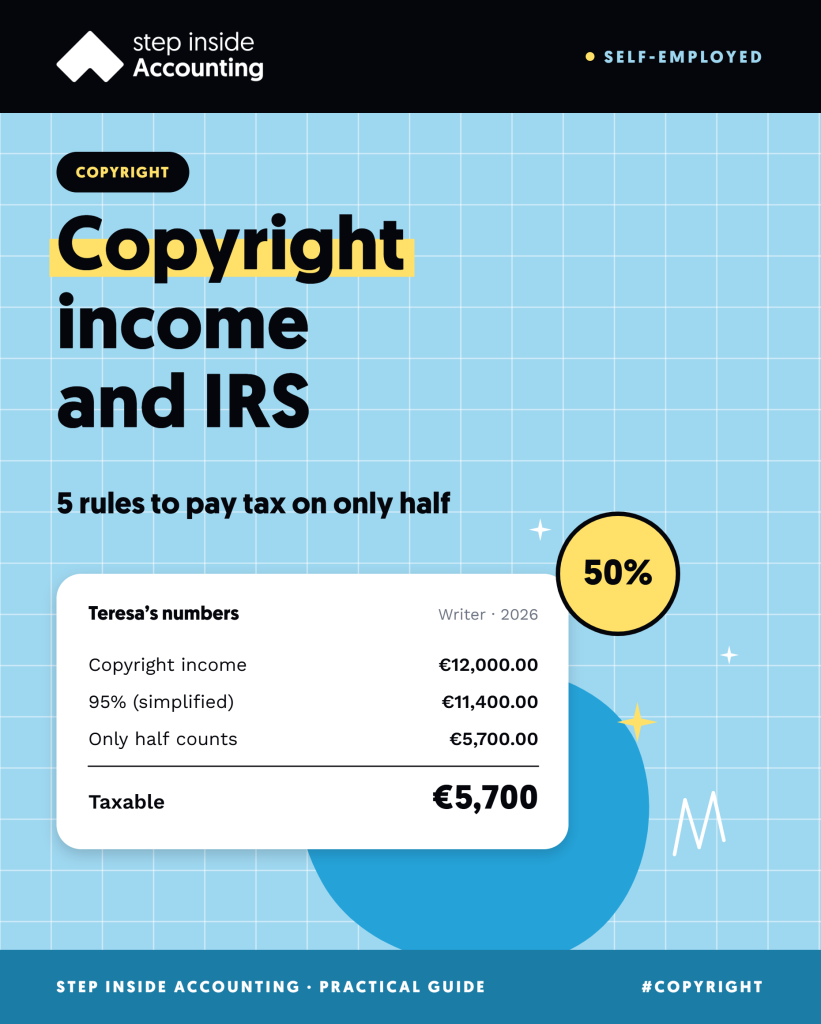
Writers, illustrators, photographers, musicians and other creators often receive copyright income (direitos de autor). When the income belongs to the author, it is treated as self-employment income and has a benefit few people know about: only half counts for IRS, up to a limit. These are the five rules to report this income correctly.
Category B: 5 rules to know what counts as self-employed income
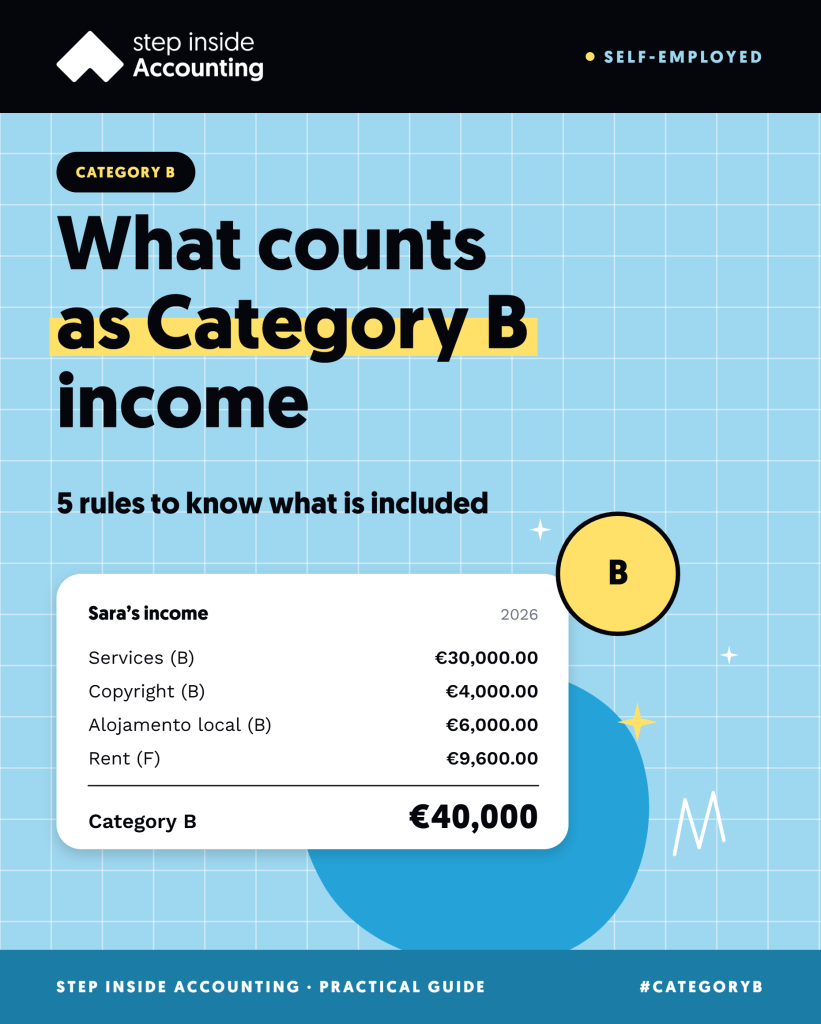
In IRS, every type of income has a category, and each category has its own rules for calculation, withholding and reporting. Category B is the one for self-employed workers and sole traders. It includes recibos verdes, but also other income that often goes unnoticed. These are the five rules to know what falls into it – and what does not.
Selling a property that was in alojamento local: 5 rules so you do not pay IRS on twice the capital gain
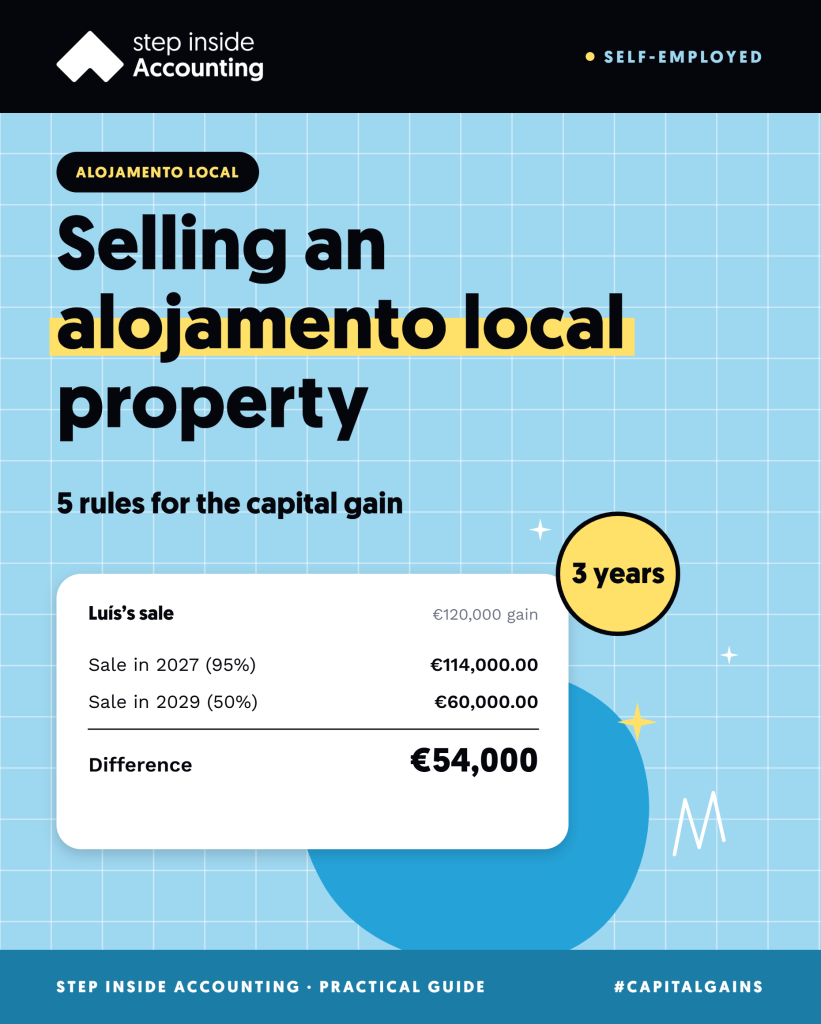
When you sell a home you used for alojamento local, the IRS on the gain depends on a calendar. If the property is still part of the activity, or left it less than three years ago, the gain is taxed almost in full. After that, only half counts. These are the five rules to plan the sale.
Alojamento local and IRS: 5 rules to know how much tax you pay on what you receive
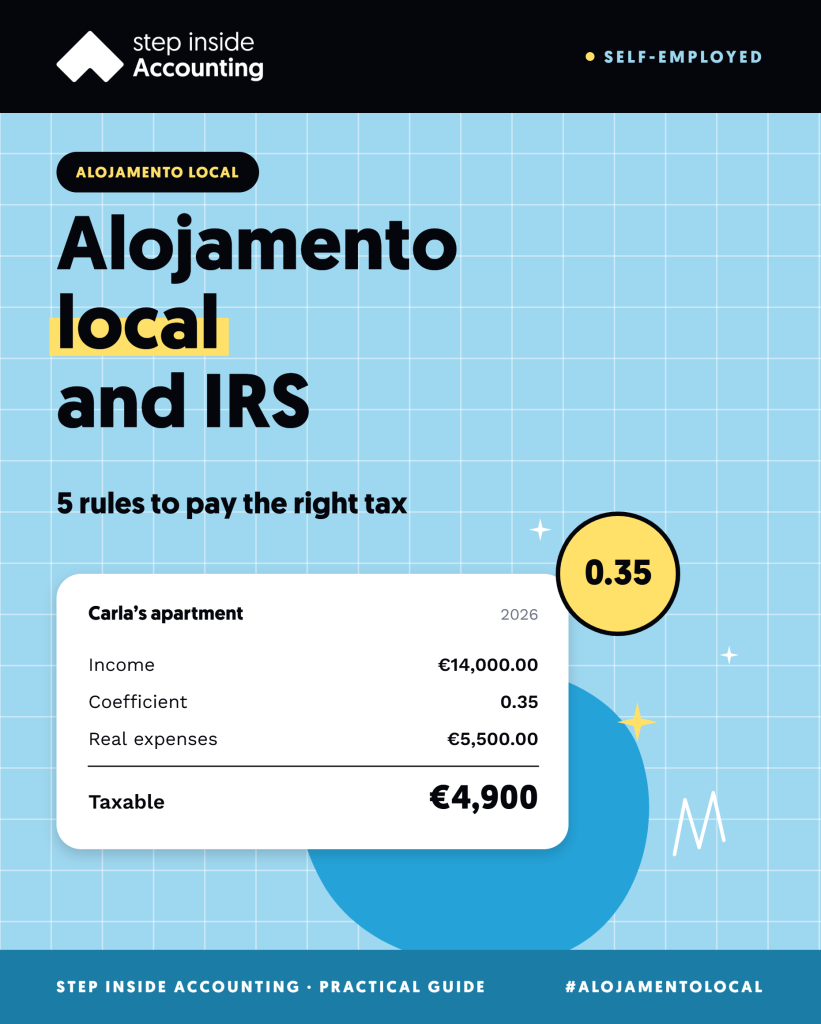
Running an apartment as alojamento local (short-term holiday rental) is not the same as renting it out: it is an activity, with a start of activity at the Tax Authority and self-employed income. The tax depends on the type of accommodation, the area where the property is and a choice you make every year in your IRS return. These are the five rules to pay the right tax.
The 15% rule of the simplified regime: 5 rules so you do not pay IRS on expenses you did not justify
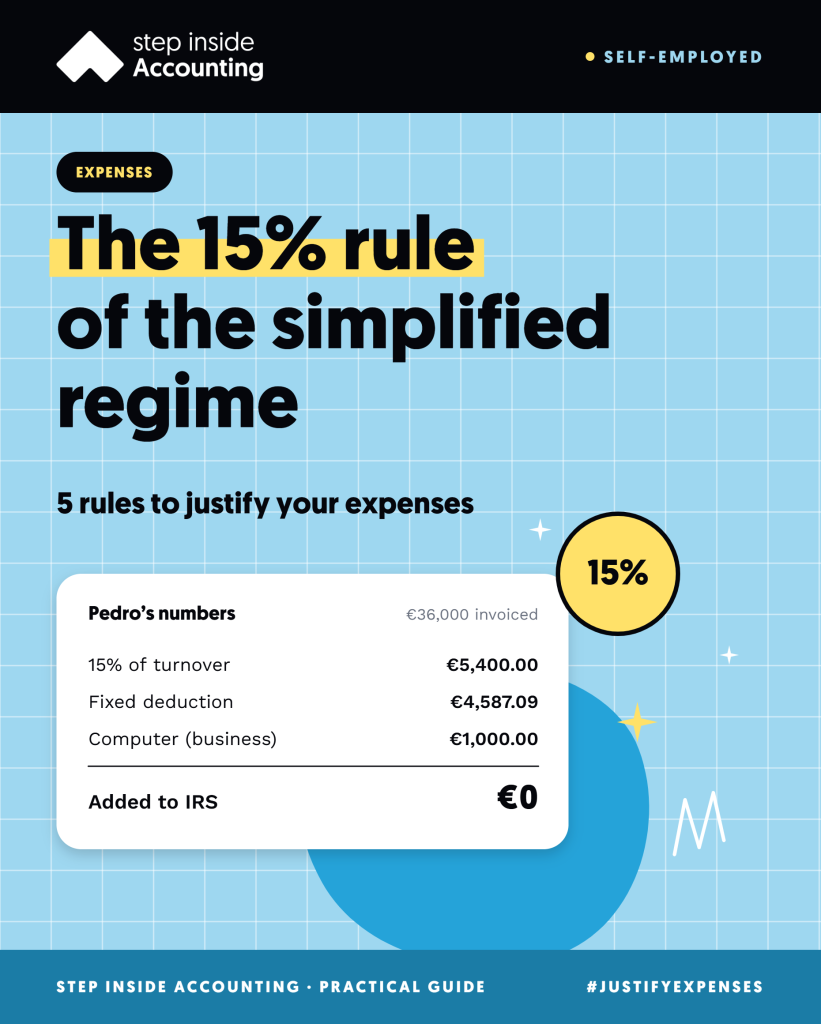
Under the simplified regime you do not have to prove expenses – with one exception. For services, you have to justify expenses equal to 15% of what you invoice. Whatever is missing is added to your taxable income. For many self-employed workers the numbers add up on their own; for others, an invoice wrongly classified in e-fatura turns out to be expensive. These are the five rules to get it right.