


IRS Deductions from Tax (Deduções à Coleta) in Portugal: What They Are and Their Limits
When people in Portugal talk about “getting money back” in their IRS, they’re usually talking about deductions from tax (deduções à coleta). Unlike deductions from income, these are subtracted directly from the tax calculated — every euro counts in full. Here’s what you can deduct and the limits for income earned in 2026.
Non-Residents Selling Portuguese Shares: The Capital Gains Exemption (Article 27 EBF)
If you live outside Portugal and sell shares or other securities of Portuguese companies at a profit, you may not owe any Portuguese tax. Article 27 of the Tax Benefits Statute (EBF) exempts many capital gains realised by non-residents — but with important exceptions. Here’s how it works.
Non-Residents in Portugal: When You Don’t Need to File an IRS Return (Liberatory vs Special Rates)

If you live abroad but receive income from Portugal — a salary, dividends, interest or a pension — do you need to file a Portuguese IRS return? Often, no: when the tax withheld in Portugal is a liberatory (final) tax, there’s nothing more to do. But when income is subject to a special rate, you must file. Understanding the difference is the key.
Progressive vs Special Rates in Portuguese IRS: Which Income Gets Which Rate?
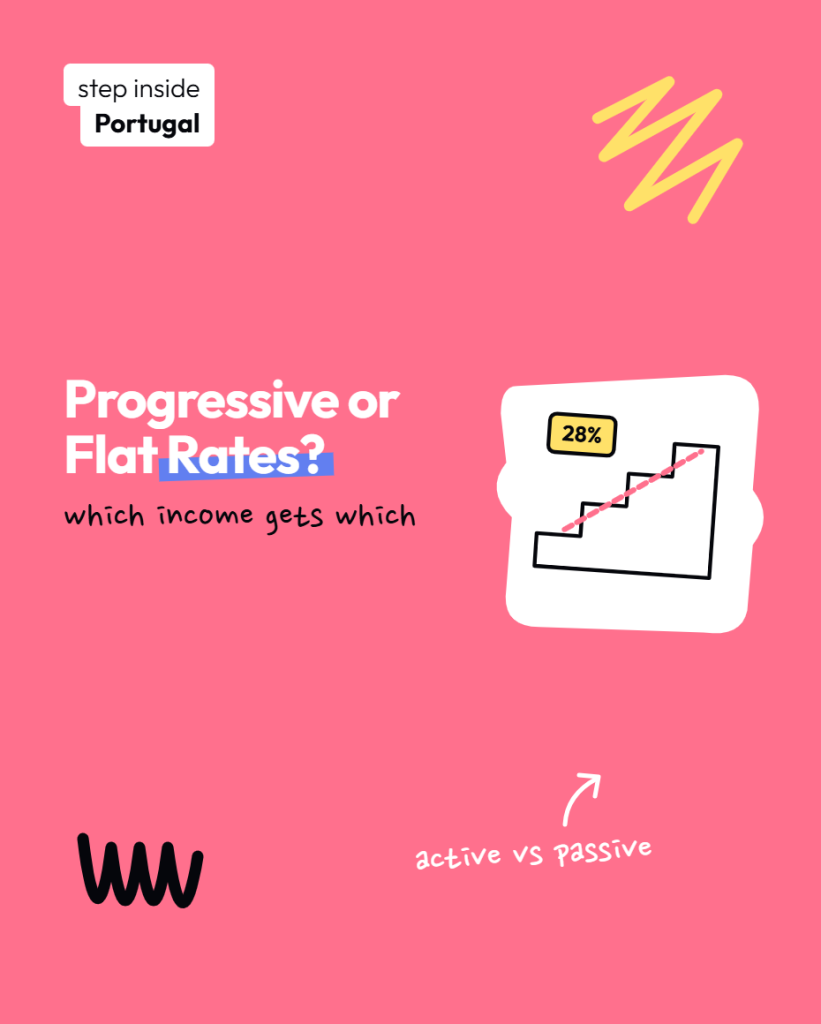
Portuguese IRS has two kinds of rates: progressive rates, which increase with income (from 12.5% to 48%), and special flat rates (taxas especiais), such as 28% or 25%. Some income must always be taxed at progressive rates. Other income is taxed at a flat rate by default — but you can choose to aggregate it. Here’s how to tell them apart.
The IRS Solidarity Surcharge in Portugal: What It Is and When It Applies
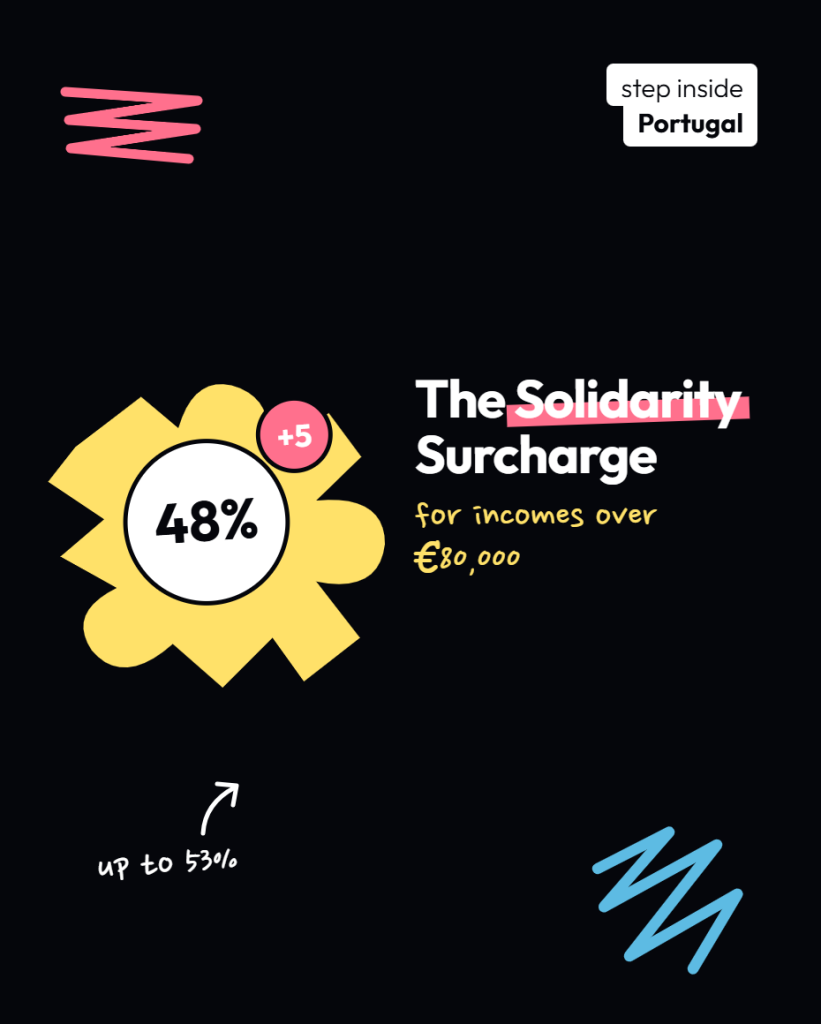
Portugal’s top IRS rate is 48% — but for very high incomes, there’s an extra layer: the solidarity surcharge (taxa adicional de solidariedade). It only affects taxable income above €80,000, but it can push the marginal rate up to 53%. Here’s how it works.
The Subsistence Minimum (Mínimo de Existência) in Portuguese IRS Explained
Portugal protects lower incomes from IRS through the subsistence minimum (mínimo de existência). If your income is mainly from work or pensions and doesn’t exceed a reference value — €12,880 in 2026 — you generally don’t pay IRS. Above that, the benefit decreases gradually. Here’s how it works.
The IRS Tax Return in Portugal: Who Must File, Deadlines, Automatic IRS and Exemptions

Every spring, Portugal’s taxpayers file their IRS return (Modelo 3) for the previous year. If you’ve just moved here, you’ll want to know: do I have to file? When? Can I use the automatic IRS? And am I exempt? Articles 57 to 61 of the IRS Code answer these questions. Here’s a practical overview.
Divergence of Values in Capital Gains (Article 52 IRS): When the Tax Authority Can Correct Your Sale Price

Selling shares in a company for a low price — or for a symbolic amount? Under Article 52 of the IRS Code, the tax authority can correct the sale value declared for capital gains purposes when it has well-founded reasons to believe it doesn’t match the real value of the transaction. It’s an anti-abuse rule that matters especially for sales of quotas and unlisted shares. Here’s how it works.
Capital Gains with Related Parties in Portugal: The Arm’s Length Rule in IRS

Selling a property to your own company? Transferring shares to a family member’s business? When an individual sells assets to a related party, the price can’t simply be whatever suits the parties. Since 2024, Article 43(11) of the IRS Code expressly says that capital gains and losses in these operations must follow transfer pricing rules: the terms must be the same as those between independent parties. Here’s what that means.
Investments Linked to Tax Havens: Why Portugal Taxes Them at 35%
Portugal taxes most investment income and gains at 28%. But when the income comes from entities in a tax haven — a jurisdiction on Portugal’s list of countries with clearly more favourable tax regimes — the rate rises to 35%, and other restrictions apply. If you hold funds, bonds or shares linked to these jurisdictions, here’s what you need to know.